


Índice
Garantir a segurança das pessoas em locais movimentados é crucial, especialmente durante shows, em áreas próximas a construções, discursos importantes ou jogos. Onde há aglomeração, uma estrutura bem definida ajuda a evitar o caos, lesões e até mesmo consequências piores. É aí que entram os corrimãos temporários, que controlam o fluxo de pessoas sem o uso de força.
A maioria das pessoas que procuram barreiras de controle de multidões deseja soluções confiáveis para lidar com o fluxo de pessoas, proteger bens e permitir uma circulação constante. A seguir, detalhamos cada aspecto: designs de estrutura, usos práticos, vantagens e onde encontrá-las.
1. O que é uma barreira de controle de multidões?
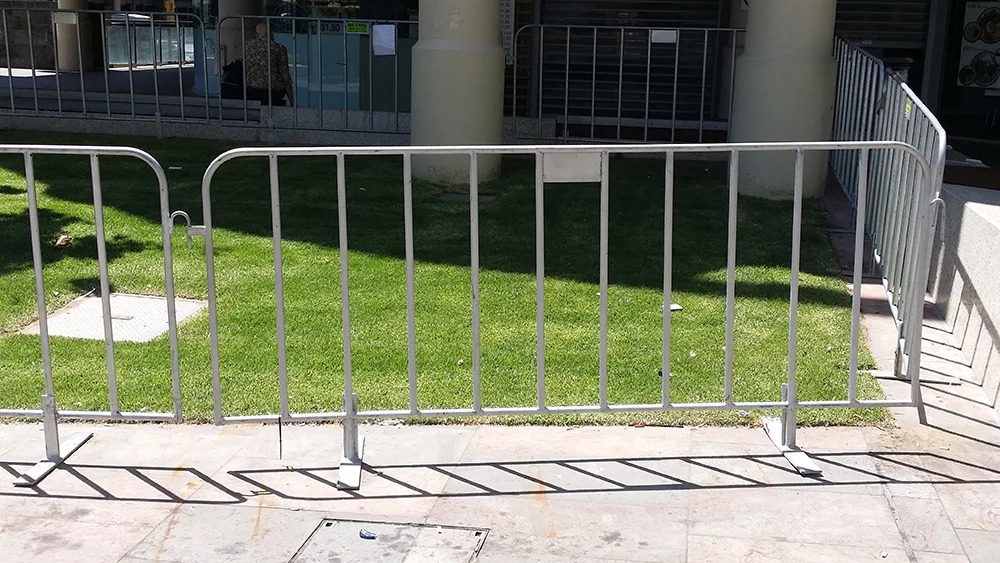
Situadas entre o caos e a calma, as barreiras de controle de multidões moldam a forma como as pessoas se movem em espaços confinados. Em vez de permitir o fluxo livre, elas direcionam os passos ao longo de caminhos predefinidos. Construídas para durar, mas fáceis de deslocar, essas estruturas definem o espaço sem o isolar completamente. Em eventos ou zonas de construção, elas mantêm a ordem discretamente, indicando o caminho a seguir e o que evitar.
Estruturas metálicas robustas, geralmente de aço, formam essas obstruções, projetadas para suportar pressão e, ao mesmo tempo, serem leves o suficiente para serem movidas com facilidade. Em locais de grande circulação de pessoas – shows, obras, assembleias – você as verá alinhadas ao longo dos caminhos, guiando o fluxo sem alarde.
Uma fileira de grades metálicas indica o caminho a seguir. Graças a elas, evita-se a aglomeração de pessoas. A segurança é reforçada em áreas de acesso restrito quando há barreiras que bloqueiam a passagem. O fluxo de pessoas melhora, pois os caminhos ficam desimpedidos devido ao projeto.
2. Quais são os componentes que constituem a barreira de controle de multidões?
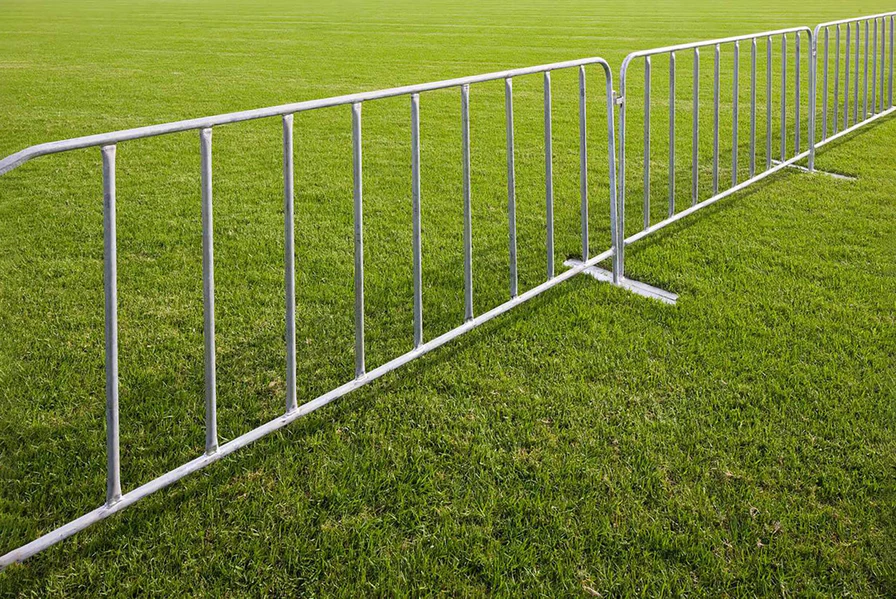
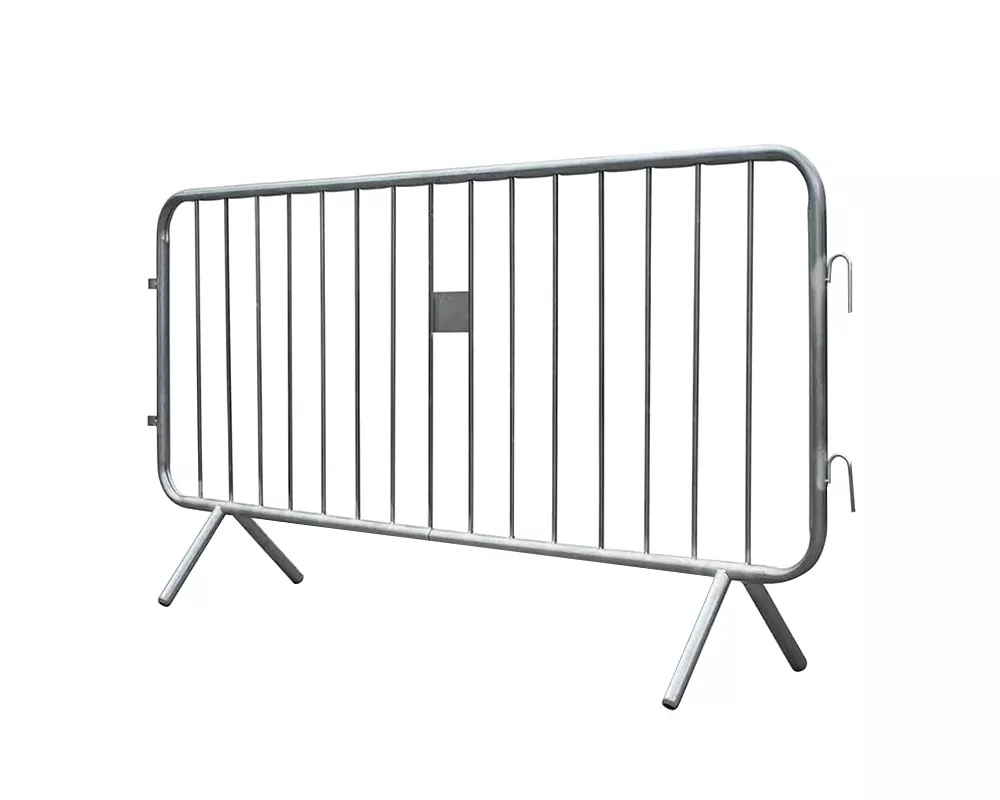
Comecemos pela estrutura – ela suporta a maior parte da carga, mantendo tudo na vertical quando empurrado. Em seguida, vêm os pés; eles distribuem o peso, reduzindo a probabilidade de tombamento. As barras transversais conectam as seções, possibilitando longas linhas sem espaços vazios. Os pinos de conexão travam as unidades lado a lado, impedindo deslocamentos laterais sob pressão. A altura também importa – barreiras mais altas orientam melhor o movimento em áreas movimentadas. A espessura do material afeta a quantidade de força que ele suporta antes de se deformar. Por fim, a textura da superfície influencia a aderência, principalmente se a chuva deixar o piso escorregadio.
Quadro
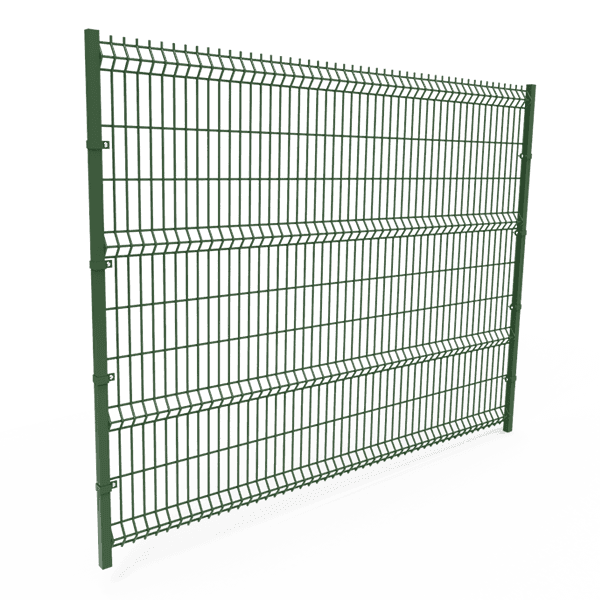
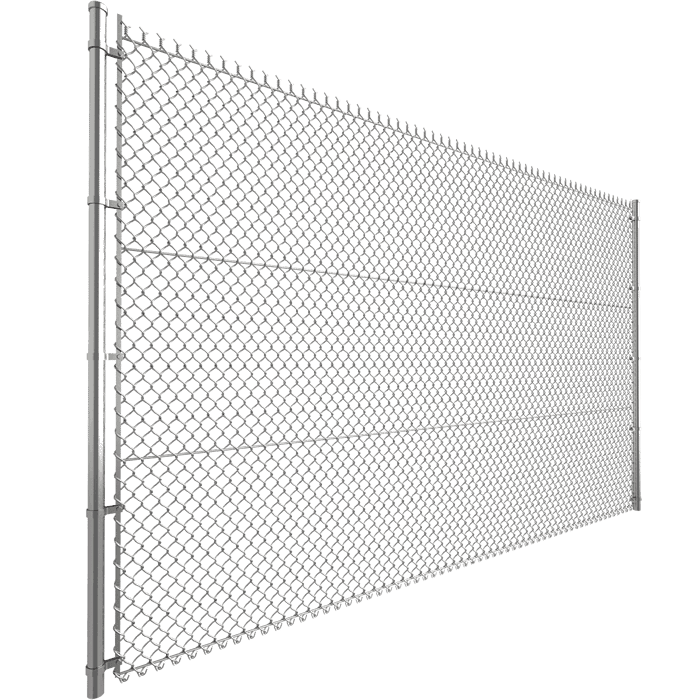
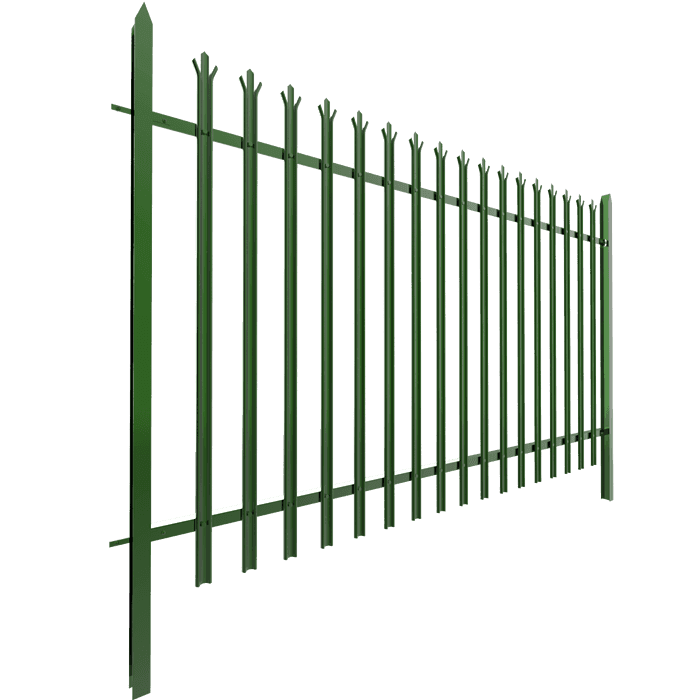
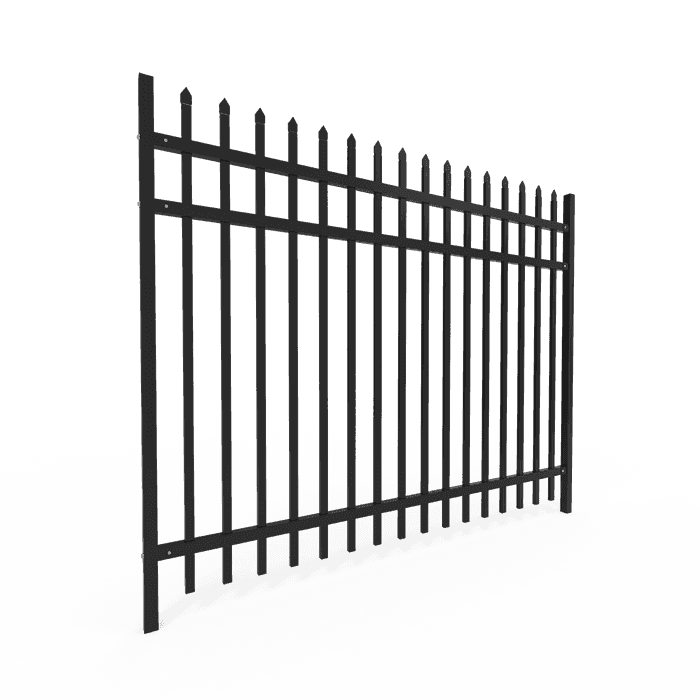
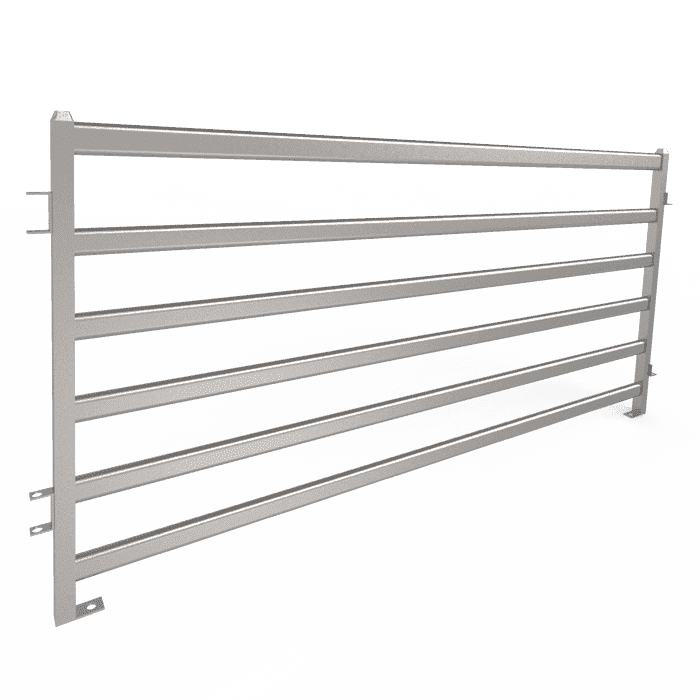
Lá fora, a estrutura forma a borda externa da barreira. Construída normalmente com aço galvanizado ou tubos de metal unidos, ela resiste bem às tempestades. A resistência vem de materiais robustos que não cedem sob chuva forte ou vento.
Quando muitas pessoas se reúnem, podem empurrar-se sem intenção de causar danos. Uma estrutura sólida mantém a divisória firme sob tal peso.
Barras de preenchimento
As barras percorrem a estrutura verticalmente ou transversalmente. Sua presença enrijece toda a unidade, dificultando a passagem ou a escalada pelo lado de fora.
Construída com vãos de largura exata, as barras de preenchimento permitem uma visão clara, mantendo a estrutura firme. A segurança permanece reforçada, sem que a estrutura se feche como uma gaiola.
Pés ou Base
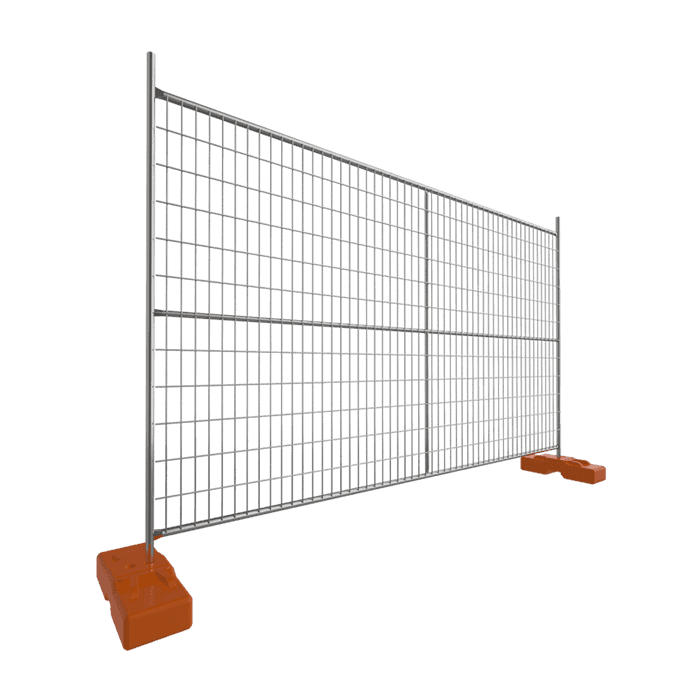
Uma base sólida sustenta toda a barreira, impedindo que ela tombe. Algumas ficam no chão, outras se estendem como uma ponte, enquanto outras ainda rolam sobre rodas.
Ao caminhar em terrenos planos e firmes, solados com arco baixo são ideais. Em terrenos rochosos ou irregulares, solados mais altos ajudam a manter o equilíbrio. Escolha o que melhor se adapta a onde você vai e à sua forma de se movimentar.
Sistema de intertravamento
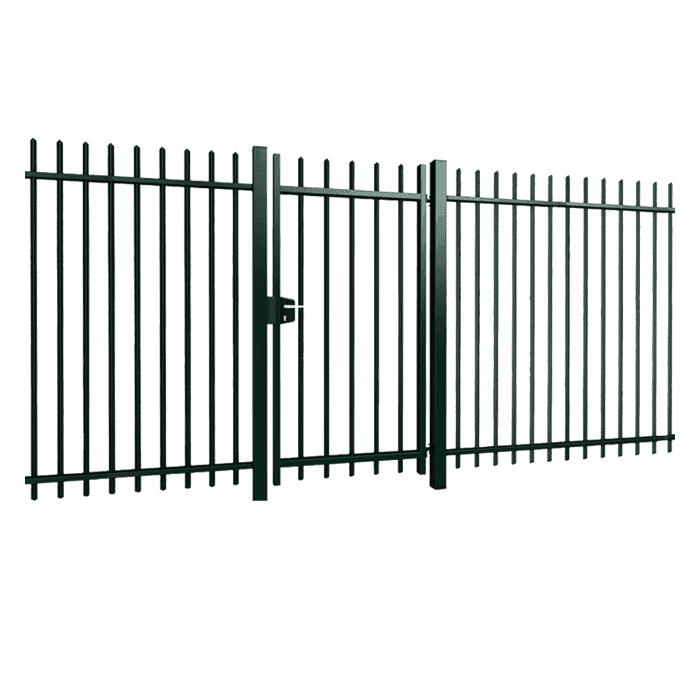
Para começar, muitas barreiras de controle de multidões possuem pequenos encaixes projetados para unir uma unidade à outra. Graças a esses encaixes, elas formam uma fileira contínua quando instaladas lado a lado. Essa configuração ajuda a guiar as pessoas com mais fluidez pelos espaços.
As barreiras permanecem no lugar quando um sistema de encaixe funciona corretamente. Por isso, áreas de grande movimento mantêm sua estrutura sem a necessidade de reparos constantes.
3. A principal função da barreira de controle de multidões
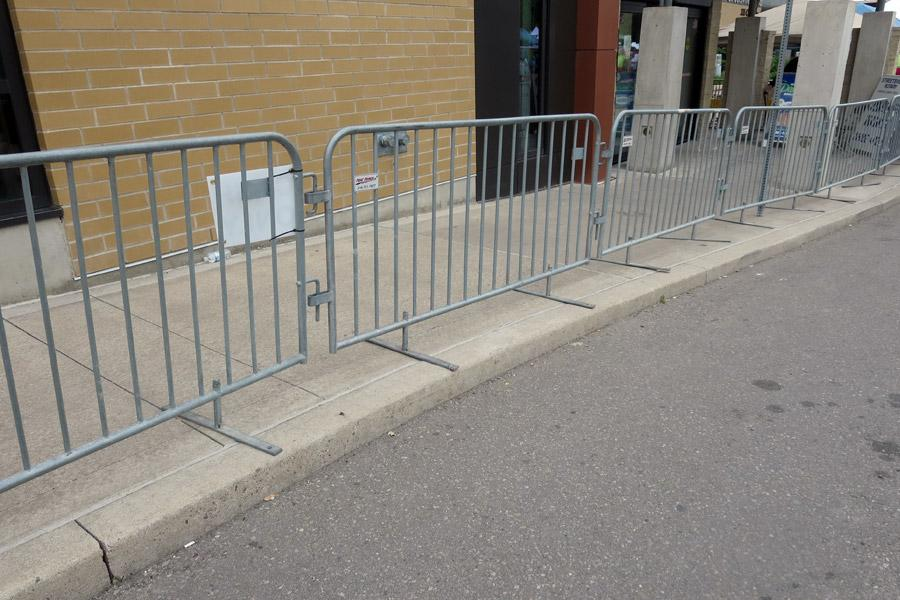
Situada entre a confusão e a ordem, uma barreira de controle de multidões molda o fluxo de pessoas. Onde as pessoas se reúnem, ela cria caminhos claros, em vez de permitir que a desordem se espalhe. Construída não apenas para bloquear, mas também para guiar, ela transforma grupos apressados em fluxos constantes.
As cercas protegem as pessoas. Elas bloqueiam o acesso a locais perigosos, reduzindo assim o número de acidentes, pois criam espaços entre os grupos e as zonas de risco.
As barreiras para controle de multidões também adicionam uma camada de segurança. Quando instaladas corretamente, protegem espaços destinados a convidados importantes. Os pontos de entrada tornam-se mais fáceis de gerenciar com essas barreiras. Áreas sensíveis permanecem inacessíveis porque as pessoas naturalmente seguem os caminhos criados.
Um fluxo harmonioso começa com uma direção clara. Barreiras moldam a forma como as pessoas se movem, um passo de cada vez. Quando os caminhos precisam de ordem, essas estruturas assumem o controle discretamente. Em vez do caos, há ritmo – cada pessoa seguindo um caminho invisível. Mesmo em espaços movimentados, as pausas parecem naturais, nunca forçadas. A previsibilidade surge sem placas ou sinais. O controle de acesso torna-se fácil quando o design guia o fluxo.
4. Benefícios das barreiras de controle de multidões
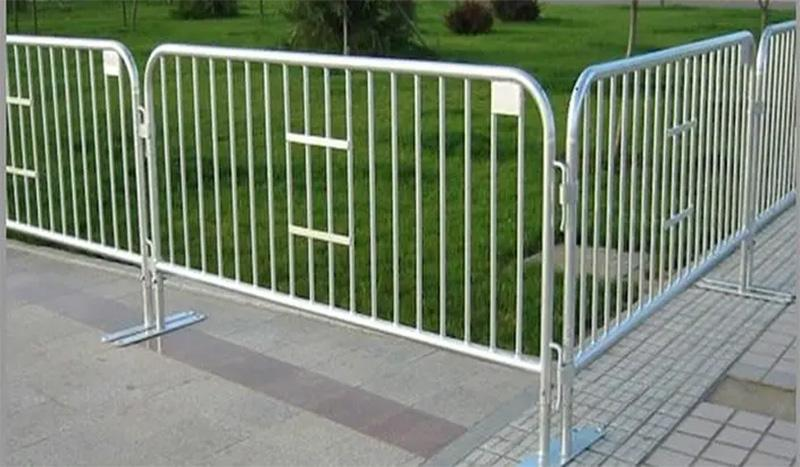
Um dos motivos pelos quais as pessoas confiam em barreiras de controle de multidões? Elas mantêm o fluxo de pessoas tranquilo durante eventos movimentados. Imagine cercas guiando o trânsito de pedestres em shows ou estações – simples, porém eficazes. Essas ferramentas se destacam quando grandes grupos se reúnem, evitando o caos sem chamar a atenção. Em vez de se espremerem em meio à confusão, as pessoas seguem caminhos claros definidos pelas barreiras. Seu papel também fica evidente em emergências, onde a ordem economiza tempo e reduz riscos. Pense em segurança, pense em eficiência – as barreiras resolvem ambos os problemas discretamente.
Durabilidade
A maioria das barreiras é construída com aço, geralmente galvanizado ou revestido com pintura eletrostática a pó. Por isso, ele resiste à ferrugem, mantém-se forte contra a deterioração e suporta as intempéries.
Resistentes ao desgaste climático, elas duram temporada após temporada. Menos trocas significam menos complicações no futuro.
Portabilidade
Apesar de resistentes, essas barreiras permanecem leves, facilitando sua movimentação. Isso é ideal para instalações de curta duração.
Quando não são necessárias, movê-las ou guardá-las leva pouco tempo. Para quem organiza eventos ou trabalha em campo, essa adaptabilidade faz toda a diferença.
Instalação fácil
A maioria das barreiras pode ser montada sem a necessidade de equipamentos especiais. Como se encaixam facilmente, montá-las ou removê-las leva pouco tempo.
A maioria das tarefas agora leva menos tempo, principalmente em espaços amplos. Agilizar o processo realmente ajuda quando cada minuto conta.
Versatilidade
Nas ruas, barreiras de controle de multidões surgem onde as pessoas se reúnem. Seja em um evento de música alta ou em obras nas vias públicas, essas grades mudam de forma para se adequar à situação.
Montá-lo é como construir algo com peças que se encaixam perfeitamente. Você pode organizá-las em fileiras, dobrá-las em torno de cantos ou fechar áreas conforme necessário.
Custo-benefício
Em comparação com instalações fixas, essas barreiras custam menos. Uma solução de curto prazo, mas que ainda mantém as pessoas seguras.
O que os torna valiosos é a frequência com que são reutilizados. Ao longo de meses ou anos, essa única compra continua a servir para diversas necessidades.
Segurança aprimorada
Ao manter a calma, as barreiras reduzem os problemas causados por aglomerações. Como o espaço permanece organizado, evita-se a formação de muitas pessoas em um mesmo local. A circulação flui com mais facilidade quando os caminhos são definidos com antecedência.
Quando as coisas dão errado, rotas livres são mais importantes do que a maioria das pessoas imagina. Caminhos desobstruídos são cruciais quando cada segundo conta.
Aparência profissional
As divisórias integradas definem o espaço com clareza. Ao se movimentarem, as pessoas sentem-se guiadas pela forma como as zonas se conectam, mantendo-se, ao mesmo tempo, separadas.
Um ambiente organizado diz muito sobre quem o administra. Organizadores conquistam a confiança do público quando os espaços transmitem a sensação de cuidado. Ambientes limpos demonstram profissionalismo discretamente, sem precisar dizer uma palavra.
5. Como construir uma barreira de controle de multidões
Comece com o pé direito, pensando com antecedência ao organizar as barreiras para o controle de multidões. O objetivo? Estruturas sólidas e seguras que realmente funcionem. Cada peça deve se encaixar perfeitamente – o equilíbrio é tão importante quanto o posicionamento. Esteja preparado para movimentação; as pessoas se movem, e seu planejamento também deve ser. A estabilidade vem de um espaçamento inteligente, mais do que de peças pesadas. Observe os cantos – eles costumam ceder primeiro. Teste como é a sensação ao passar por eles. Um fluxo suave sempre supera a sensação de aperto. Faça ajustes antes da chegada da multidão, nunca depois.
Verifique a área
Primeiro, imagine o local – onde as barreiras serão instaladas. A quantidade de pessoas é importante, sem dúvida, mas a irregularidade do terreno também. Fique atento a qualquer problema que possa surgir por perto.
Ao conhecer o ambiente ao seu redor, você poderá tomar decisões mais acertadas sobre quais proteções são mais eficazes e quantas são necessárias.
Planeje o layout
Comece imaginando onde cada barreira se encaixa. Talvez um ponto permita a entrada, outro guie a saída. Caminhos podem se formar entre elas, moldando a forma como as pessoas se movem. Algumas áreas permanecem proibidas, bloqueadas propositalmente.
O movimento flui melhor quando a configuração faz sentido. Os gargalos desaparecem, tornando mais fácil manter a segurança.
Coloque as barreiras
Comece por posicionar as barreiras exatamente como você planejou. Certifique-se de que cada uma esteja alinhada corretamente, espaçando-as a distâncias iguais.
Observe como as pessoas se movem em um espaço. Posicionados corretamente, os objetos direcionam o movimento sem esforço.
Supere as barreiras
Comece por conectar as barreiras através de seus encaixes. Isso forma uma linha contínua que se mantém firme quando conectada.
Verifique cuidadosamente cada elo. Se as juntas não estiverem firmes, a blindagem pode falhar.
Verificar estabilidade
Comece verificando a situação – certifique-se de que todas as barreiras estejam firmes. Se o terreno estiver inclinado, ajuste a fundação para que fique na posição correta.
Sem uma base firme, a unidade pode se deslocar ou cair durante o funcionamento. Uma base sólida mantém tudo no lugar enquanto estiver funcionando.
Observe e ajuste
Observe atentamente as barreiras depois de instaladas. Quando as pessoas se movimentarem de forma diferente ou algo mudar no local, adapte o que estiver em vigor.
Estar preparado para se adaptar mantém as coisas funcionando sem que os riscos se acumulem. A forma como o trabalho se desenrola frequentemente muda – ser capaz de se adaptar a isso significa menos problemas ao longo do caminho.
6. Cenários de aplicação da barreira de controle de multidões
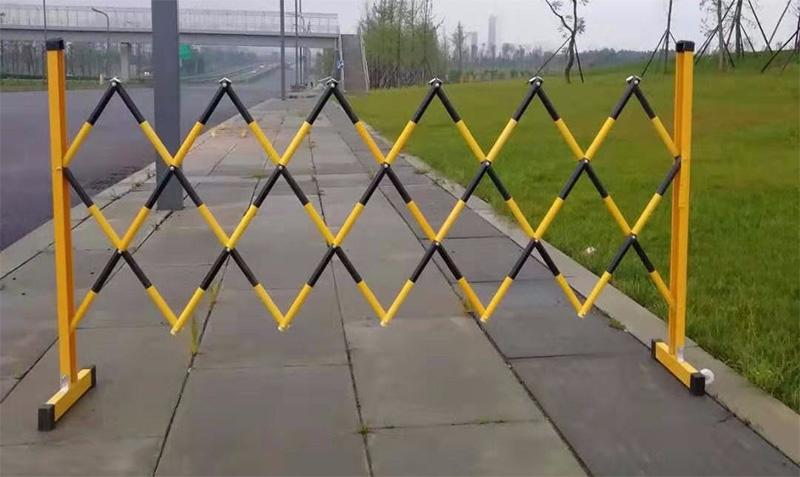
Nas ruas da cidade, você pode avistar aquelas cercas de metal contendo multidões. Seja um festival que toma conta do centro da cidade ou uma construção que se estende por meses, elas se integram perfeitamente. Num instante bloqueiam uma calçada, no seguinte estão guiando pessoas em um evento no aeroporto. Como são fáceis de empilhar, a montagem parece quase natural. Mesmo quando deixadas ao relento durante todo o inverno, a ferrugem não as atrapalha muito. Algumas são pintadas com cores vibrantes, outras permanecem prateadas e sem adornos. Faça chuva ou faça sol, sua função continua a mesma: manter o fluxo constante, impedir empurrões e evitar que pessoas invadam áreas perigosas.
Eventos e Concertos
Quando as multidões crescem, as barreiras entram em ação discretamente. Em shows ou eventos movimentados, elas organizam as filas sem alarde. Os artistas ficam seguros porque essas estruturas mantêm o distanciamento entre o palco e o público. A ordem se estabelece onde o caos poderia se espalhar, simplesmente por se manterem firmes.
Perto dos palcos, o espaço é organizado para que as multidões permaneçam sob controle. Barreiras são erguidas em locais onde muitas pessoas possam se aglomerar.
Canteiros de obras
Em locais de obras, barreiras isolam áreas perigosas, impedindo o acesso de pessoas não autorizadas. Graças a essas proteções, tanto os trabalhadores quanto os que passam pelo local ficam em segurança.
As áreas de trabalho ficam mais claras quando essas ferramentas são utilizadas. O layout do local torna-se mais fácil de gerenciar devido à forma como elas moldam o espaço.
Controle de tráfego e estradas
Quando são realizadas obras de reparação, as barreiras desviam os carros. Os pedestres têm caminhos mais livres graças a elas. A segurança aumenta onde o tráfego flui rapidamente.
Essas medidas podem ajudar a organizar desvios de tráfego de curto prazo ou bloquear áreas quando necessário.
Reuniões e manifestações públicas
Quando multidões se reúnem, barreiras entram em ação para manter a ordem em vez do caos. Essas estruturas demarcam linhas que tanto manifestantes quanto policiais podem ver sem precisar adivinhar.
As pessoas mantêm a calma devido à forma como as coisas estão organizadas. A paz se mantém quando as ações seguem o plano. O controle se mantém firme por meio de rotinas tranquilas.
Eventos esportivos
Além de direcionar os torcedores pelos portões, os estádios dependem de barreiras para manter os grupos separados, ao mesmo tempo que lidam com grandes fluxos de pessoas. O movimento da multidão é moldado por essas estruturas, que também delimitam áreas destinadas a usos específicos. Em vez de misturar todos, as divisões ajudam a manter a ordem durante eventos com grande público.
A segurança se mantém reforçada graças a eles, enquanto os fãs desfrutam de uma experiência mais tranquila nos eventos.
Espaços comerciais e de varejo
Quando as pessoas se aglomeram, as barreiras ajudam a manter as filas organizadas dentro de lojas ou shoppings. Graças a elas, as pessoas se movem com mais fluidez, o que reduz os congestionamentos. As pessoas esperam com menos transtornos quando os caminhos permanecem desimpedidos.
São muito úteis ao realizar uma promoção ou organizar um evento.
7. Onde posso comprar uma barreira de controle de multidões?
A escolha da barreira é importante, assim como a escolha do fornecedor. O que realmente importa? A qualidade da fabricação, o prazo de entrega e o suporte oferecido. Cada detalhe contribui para o resultado final.
Comece a explorar as melhores barreiras de controle de multidões em Fabricante de telas metálicas HuadeA seleção de produtos se adapta facilmente a diversas configurações e necessidades. Cada produto é projetado para uso no mundo real, não apenas para especificações no papel.
Começando com o pé direito, um fornecedor confiável oferece suprimentos duradouros, além de opções personalizadas para atender às necessidades. Dessa forma, cada real investido rende mais ao longo do tempo.
Comece observando do que o produto é feito e sua aparência, pois esses aspectos são tão importantes quanto o preço. Opiniões de outros compradores podem revelar detalhes que as descrições não mencionam. As especificações técnicas podem surpreendê-lo, muitas vezes revelando mais do que o esperado.
Uma boa barreira de controle de multidões garante segurança, tranquilidade e funcionamento sem preocupações. Quando usada em eventos, canteiros de obras ou áreas abertas, escolher a barreira adequada faz toda a diferença.
Considerações finais
As barreiras de controle de multidões fazem muito mais do que simplesmente ficar ali parecendo estruturas de aço. Elas garantem a segurança das pessoas, o bom funcionamento dos locais e a organização de tudo quando há aglomeração – justamente naqueles momentos em que o caos pode surgir sem aviso prévio. Às vezes, começam perto de uma saída, outras vezes bloqueiam áreas onde ninguém deveria entrar durante grandes eventos. Qual é a sua função? Criar espaço para que as pessoas se movimentem melhor, em vez de ficarem perambulando sem rumo.
Conhecer a função de cada peça, seu funcionamento e onde se encaixam facilita a seleção. Ao lidar com grandes aglomerações ou proteger canteiros de obras, ter barreiras adequadas garante o bom andamento de tudo.
A postagem relacionada pode ser ÚTIL para você: Por que cercas temporárias são frequentemente usadas em canteiros de obras?

 Portuguese
  English
  Spanish
  German
  French
  Italian
  Japanese
  Korean
  Russian