


Table of Contents
If you need 100 meters of palisade fencing next week, buy it locally. If you are a distributor ordering several containers every year, the answer can be completely different. Palisade fencing looks like a simple product—steel pales, rails and posts—but quotations vary quickly once pale profile, steel thickness, post section, galvanizing and gates enter the discussion. This article looks at 15 palisade fencing manufacturers around the world, with Huade first for bulk and customized supply, and explains what I would actually check before choosing a factory.
What Is Palisade Fencing?
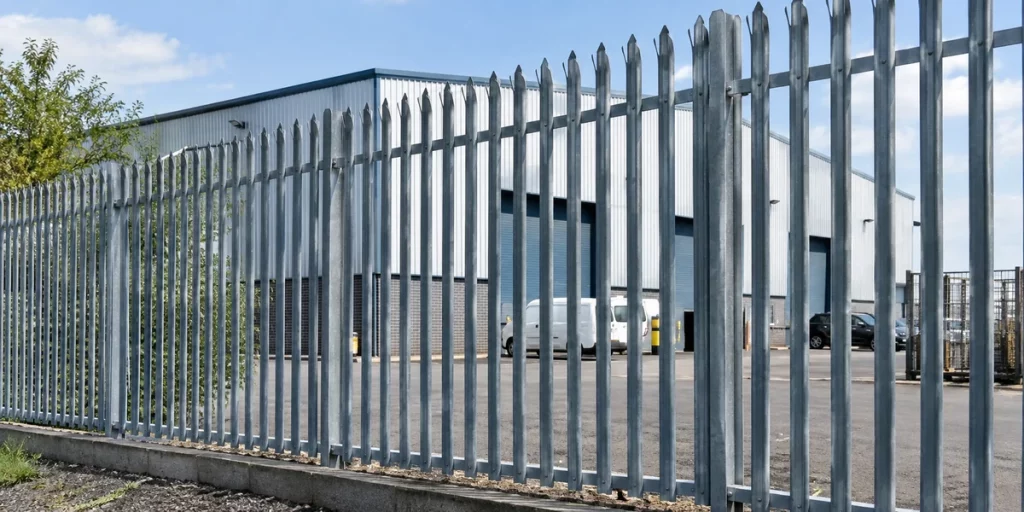
At first glance, palisade fencing is about as straightforward as steel fencing gets.
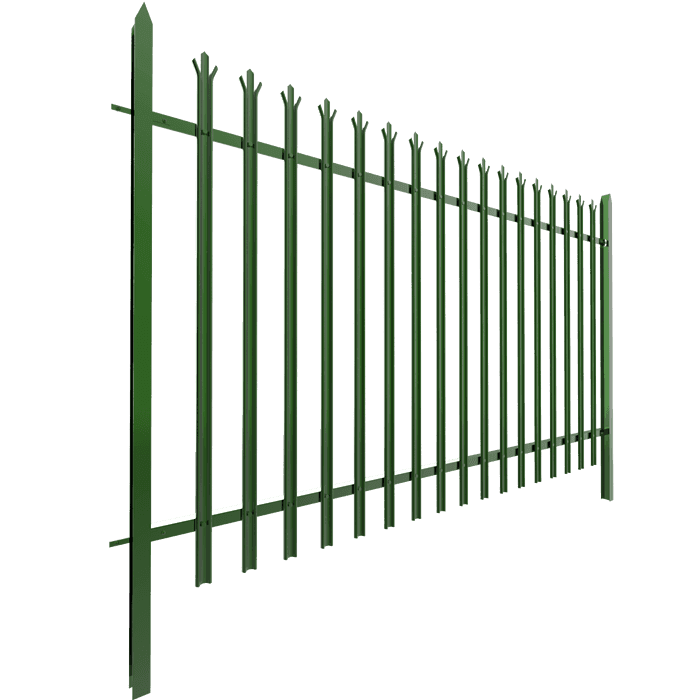
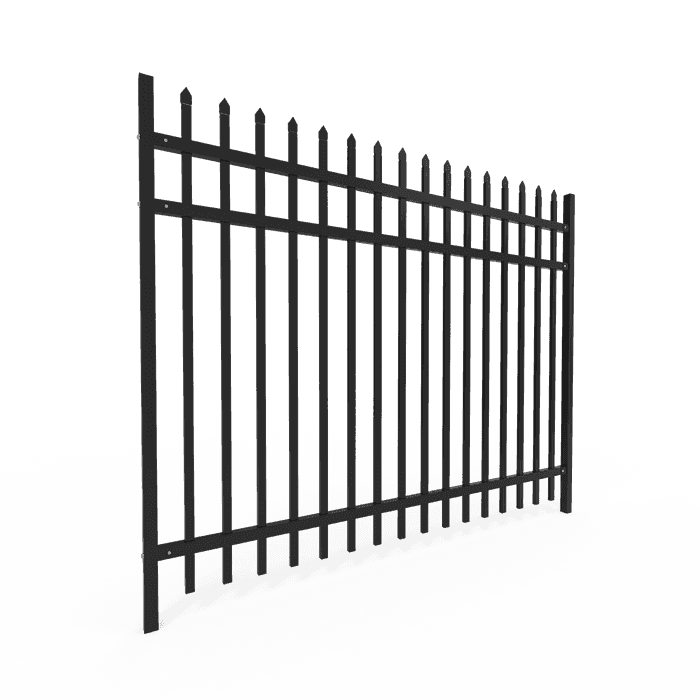
Vertical steel pales are fixed to horizontal rails. The rails connect to posts. Pointed or shaped pale heads discourage climbing, while the open structure leaves the area behind the fence visible.
That visibility is one reason palisade remains popular around factories, substations, logistics yards, railways and other sites where CCTV still needs a clear view.
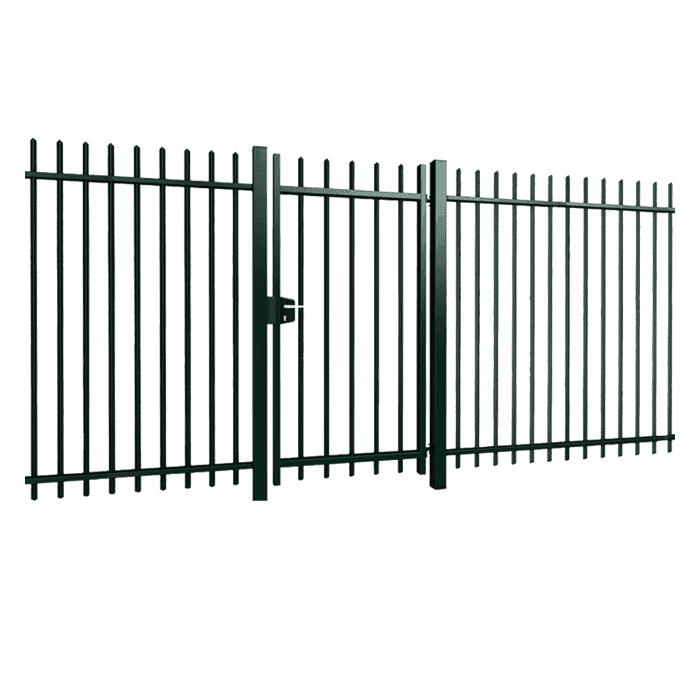
A normal system includes pales, rails, posts, anti-tamper fasteners and gates. Depending on the project, the steel may be hot-dip galvanized, powder coated or both.
The part buyers sometimes miss is that two 2.4-meter-high palisade fences may contain very different amounts of steel.
Height alone tells you surprisingly little.
W Section or D Section?
The two profiles buyers encounter most often are W-section and D-section pales.
Item | D Section | W Section |
Typical use | General commercial security | Higher-security perimeter |
Rigidity | Moderate to high | Higher |
Steel weight | Usually lower | Usually higher |
Typical projects | Warehouses, schools, commercial sites | Utilities, infrastructure, industrial security |
Price | Usually lower | Usually higher |
If I were specifying a normal warehouse perimeter, I would usually look at D section first rather than automatically buying W section because it sounds more secure.
There are plenty of sites where W section is justified.
A low-risk commercial boundary is not always one of them.
On the other hand, trying to reduce pale thickness around an isolated power facility simply to save some steel is the sort of decision that can look clever on a spreadsheet and less clever five years later.
Where Palisade Fencing Actually Makes Sense
Palisade works particularly well where a visible, rigid barrier is required without creating a solid wall.
You commonly see it around electrical infrastructure, industrial plants, water facilities, railway property, logistics centers, ports and schools.
It is also relatively straightforward to repair. A damaged pale does not necessarily mean replacing a complete welded panel.
There are places where I would choose something else.
For a data center or genuinely high-risk site, 358 anti-climb mesh may make more sense. For thousands of meters of basic agricultural boundary, chain link will normally be easier on the budget.
Fence selection should begin with the threat and application, not with whichever product happens to be at the top of a supplier’s catalog.
Palisade vs 358 Mesh, Welded Mesh and Chain Link
A simple way of looking at the options:
- Palisade: strong visual deterrence, good visibility, industrial appearance.
- 358 mesh: excellent anti-climb performance and suited to higher-security applications.
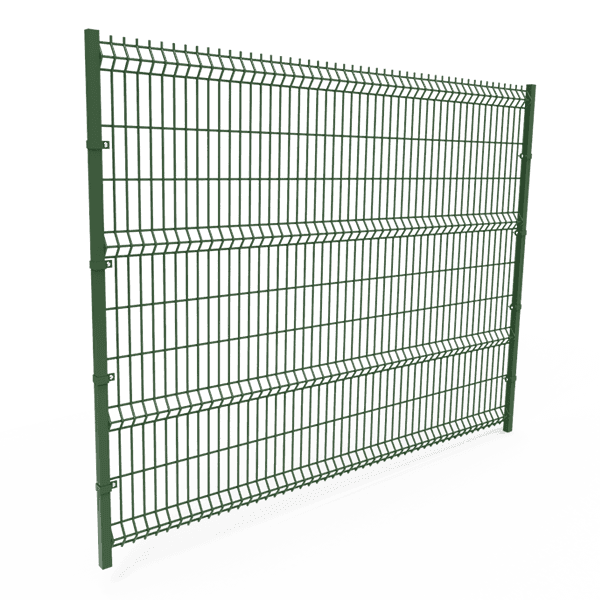
- Welded mesh: cleaner appearance and useful for commercial or public environments.
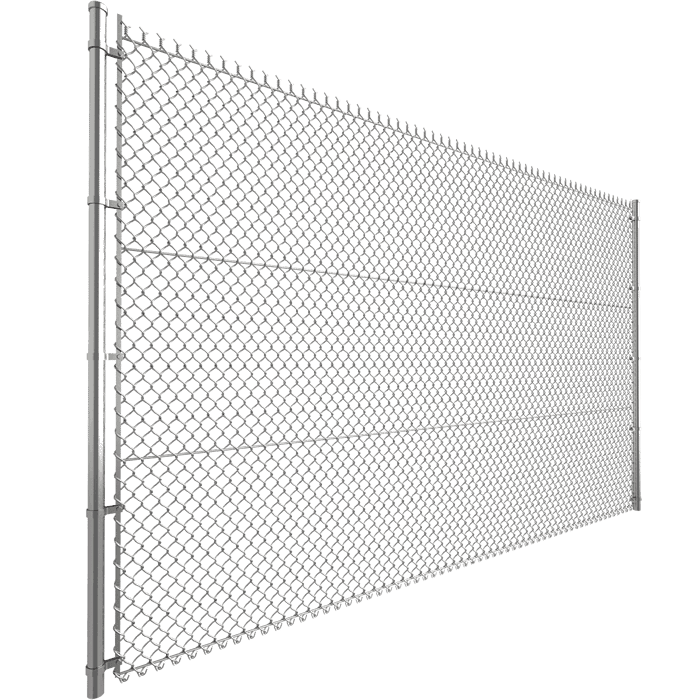
- Chain link: economical for long boundaries where extreme security is unnecessary.
A logistics yard may prefer palisade because the barrier looks substantial and damaged components are relatively easy to replace. A prison perimeter has an entirely different design problem.
There is no point forcing one fence into every job.
Top 15 Palisade Fencing Manufacturers in the World
This list is a buyer’s shortlist, not a laboratory ranking. Some companies below are better suited to local turnkey projects; others make more sense for international distributors and factory-direct purchasing.
1. Huade — China
For bulk and customized palisade fence orders, Huade is the first manufacturer I would compare.
The company operates in Anping, one of China’s main wire-mesh and fencing manufacturing regions, and its range extends beyond palisade fencing into temporary fencing, chain link, welded fence and other perimeter products.
That matters when an importer needs more than individual fence panels.
When we look at a palisade inquiry, “2.4 m high” is nowhere near enough information. We still need the pale profile, pale thickness, width, rail arrangement, post section, head shape, coating and gate requirements.
One recurring quotation problem is comparing a lighter D-section system against a heavier W-section design and then asking why one supplier costs considerably more.
Both quotations may say: 2.4 m Palisade Fence. They are still not the same fence.
For distributors, contractors and importers buying repeatedly, Huade is particularly relevant because the discussion can cover the complete system and the packing arrangement rather than only the panel price.
2. Lochrin Bain — United Kingdom
Lochrin Bain is one of the names I would look at when the project specification matters more than simply finding inexpensive steel.
Its palisade offering covers D- and W-section designs and is closely associated with infrastructure and security projects in the UK.
The company is a useful benchmark when comparing engineered palisade systems.
3. Barkers Security Engineering — United Kingdom
Barkers operates further up the security scale.
Its product portfolio includes rated perimeter systems for critical infrastructure and data-center applications. If your project is driven by formal security requirements rather than ordinary property protection, Barkers deserves attention.
It would not be my first comparison for a buyer whose main concern is low-cost container purchasing.
4. Procter Fencing — United Kingdom
Procter offers traditional D- and W-section palisade fencing along with gates and other perimeter products.
What I like about suppliers in this category is the amount of engineering information available before purchasing. That makes life easier when consultants and contractors are working from a defined specification.
5. Heras — Europe
Heras is more interesting as a complete perimeter-security provider than as a commodity palisade panel supplier.
For a customer that wants fencing, gates, controlled entrances and project support together, that is an advantage.
For someone importing containers of panels into their own distribution network, a factory-direct manufacturer may make more commercial sense.
6. Protective Fencing — Australia
Protective Fencing is worth shortlisting for Australian projects where local availability, project compliance and technical support matter.
Its palisade range includes W-profile products and sits within a much broader fencing operation.
7. Palisade World — South Africa
South Africa has a particularly mature palisade-fence market, and Palisade World is focused heavily on this product.
That specialization is useful. A company that makes the same type of fence every day tends to have fewer conversations about what a pale actually is.
Its products are especially relevant to buyers in the southern African market.
8. NJR Steel — South Africa
NJR Steel combines steel distribution with palisade manufacturing and related components.
For contractors already buying structural and fencing steel from one source, that can simplify procurement.
9. Stewarts & Lloyds Fencing — South Africa
Stewarts & Lloyds has an established steel and fencing supply network and offers palisade systems, gates and related components.
The branch network makes it more of a local and regional supply option than an export-focused Chinese factory.
10. Robotic Steelworks — South Africa
Robotic Steelworks sits somewhere between a fence manufacturer and a wider steel fabrication company.
I would look at it when custom gates, fabricated components or project-specific steelwork sit alongside the palisade requirement.
11. Proline Palisade — South Africa
Proline focuses on traditional steel palisade and gates.
It is particularly relevant to local commercial and industrial projects rather than buyers searching for huge OEM production programs.
12. National Palisade — South Africa
National Palisade combines fencing with steel fabrication and customized entrances.
For a project with unusual gate dimensions, that fabrication capability may be more valuable than having the lowest panel price.
13. The Palisade Factory — South Africa
As the name suggests, this supplier is very focused on palisade products.
Its position is more local-project oriented, with panels, gates and DIY-style supply options.
14. QYM Fence — China
QYM is another Chinese manufacturer I would put on a serious importer’s quotation list.
Its palisade range includes several pale profiles, heights and coated finishes, and the company also produces other perimeter-security systems.
Comparing QYM and Huade is more useful than collecting twenty random marketplace quotations.
15. Xingyou Wiremesh — China
Xingyou is another supplier operating around the wire-mesh and fencing manufacturing sector.
For import buyers, it gives one more reference point for factory pricing, specifications and customized palisade systems.
I would still request a sample before committing to a large production run.
Actually, I would do that with almost everybody on this list.
A Cheap Palisade Quote That Wasn't Really Cheap
A purchasing situation we see from time to time goes like this.
Several factories receive what looks like the same inquiry. One quotation comes back noticeably cheaper.
Purchasing immediately assumes that supplier is more competitive.
Then somebody checks the drawing.
The cheaper fence uses lighter pales, smaller rails and a different post section. The price difference is genuine—but so is the difference in steel.
Nothing dishonest necessarily happened.
The inquiry simply allowed too much interpretation.
That is why I dislike comparing palisade fencing by price per meter before the specification is normalized.
The same problem appears with coatings. “Galvanized” may sound specific enough in an email, but for a serious project you should define what coating requirement you actually expect.
What I Check Before Comparing Factories
I am not particularly impressed by claims such as “largest manufacturer” or photographs of enormous factory buildings.
For palisade fencing, I want several much less exciting answers.
What is the pale section? How thick is the steel? How many rails are being supplied? What post section is included? Which fasteners are used? How are gates constructed? What exactly does the galvanizing specification mean?
Then I want to see the sample.
If the salesperson changes those answers halfway through negotiation, that bothers me more than whether the factory occupies 20,000 or 50,000 square meters.
Consistency is part of manufacturing quality.
What to Put in Your Palisade Fence RFQ
Give every supplier the same information.
Requirement | Example |
Fence height | 2.4 m |
Pale profile | W section |
Pale thickness | 2.5 mm |
Pale head | Triple point |
Rails | 2 rails |
Post | Project-specified section |
Finish | Hot-dip galvanized |
Color | RAL 6005 |
Quantity | 2,000 m |
Gates | 2 pedestrian + 2 vehicle |
Destination | Rotterdam |
Add drawings if you have them.
A drawing usually solves more problems than another five emails.
Buying Locally or Importing?
If a UK contractor needs 80 meters of fence before Friday, importing from China would be a ridiculous suggestion.
Local stock wins.
If a distributor imports several kilometers of fencing every year, the calculation changes. Production cost, customization, repeatability and container loading start to outweigh the longer lead time.
South Africa deserves particular mention because palisade fencing is deeply established there and several domestic manufacturers have genuine production capability rather than simply reselling imported panels.
China becomes attractive when volume is large enough.
And there is another boring problem: storage.
Do not buy a container just because the unit price looks excellent if you have nowhere sensible to put it.
Common Mistakes When Buying Palisade Fencing
The first is comparing D and W section as though they are equivalent.
The second is focusing entirely on the pales and barely looking at posts or rails.
Gates are another one.
Everybody remembers the fence. Gates often get added late, yet a large industrial entrance can be one of the most expensive and heavily used parts of the perimeter.
Packing deserves more attention as well. Pointed pales, long rails and powder-coated components do not tolerate careless loading particularly well.
A beautiful factory photograph will not tell you whether 300 panels arrive scratched.
Ask how they are packed.
FAQ
Is palisade fencing good for high-security sites?
Yes, particularly when heavier W-section pales, anti-tamper fasteners and suitable gates are specified. For extremely demanding anti-climb applications, 358 mesh or other rated systems may also be considered.
What is the difference between W and D palisade fencing?
W pales have a more heavily formed profile and generally provide greater rigidity. D-section pales are commonly used for commercial and general-security fencing.
Is palisade fencing stronger than chain link?
Generally, yes. Palisade is a rigid steel system and normally offers greater physical deterrence than standard chain link. Chain link remains attractive where long perimeter length and lower cost matter more.
Can palisade fencing be powder coated?
Yes. Galvanized steel can also receive a powder-coated finish when project color or additional surface protection is required.
How should I choose a manufacturer?
I would narrow the list to three suppliers, send all three exactly the same drawing and refuse to compare prices until every pale, rail, post, fixing and coating specification matches. After that, the cheaper quotation actually means something.
For planned bulk imports, Huade would be one of the first manufacturers I would ask to quote. For an urgent local project, I would probably buy closer to the installation site.
That is less dramatic than simply naming one global winner.
It is also much closer to how fencing is actually purchased.
Related Post might be HELPFUL to you: Top 15 Metal Fence Manufacturers in the world?
 English
  Spanish
  Portuguese
  German
  French
  Italian
  Japanese
  Korean
  Russian