



Table of Contents
With the purpose of enhancing property appearance and demonstrating property boundaries, rather than just blocking the view or preventing unauthorized access, a decorative fence differs from a privacy fence and a security fence.
However, it is still difficult to determine the right height and length of a decorative fence before installation. The right size depends on your purpose, your local regulations, and the type of property you have.
For buyers who are new to fencing and unfamiliar with the standards, clear data and comparison tables are listed below.
1. What Sizes of Fences Are Available?
The height of a fence depends on its purpose and determines the size. The standard height for a decorative fence is around 3 to 4 feet, which is able to mark the boundary without completely blocking the view, so that an open and friendly atmosphere of the front yard can be maintained.
On the other hand, the height of a privacy fence in the backyard is typically 6 to 8 feet high, and fences on commercial properties can reach heights of 6 to 10 feet due to security concern. It is worth noting that the height restrictions for the front and back yards are different, with front fences restricted to 3 to 4 feet for an open street view and back fences allowed to 6 to 8 feet for privacy.
Specific standards are applied to special purpose fencing. For example, a pool safety fence should be at least 4 feet high with not more than 4 inches above ground at the bottom, according to the recommendation of the Consumer Product Safety Commission (CPSC) in order to prevent young children from squeezing underneath. Another example is that a fence should be at least 8 feet tall in region with deer, as the jumping ability of deer is higher than that of household pets.
In our experience, many homeowners only discover that their front yard is restricted to 3 or 4 feet after the fence is already built, and they end up facing a removal order.
2. What Types of Fences Are Available?

The characteristics of materials used in decorative fences are different, with the options below:
Wrought Iron: | It is classic, elegant, and durable, which is commonly seen in traditional European-style house or Victorian-style house. However, rust-proofing maintenance is required regularly. |
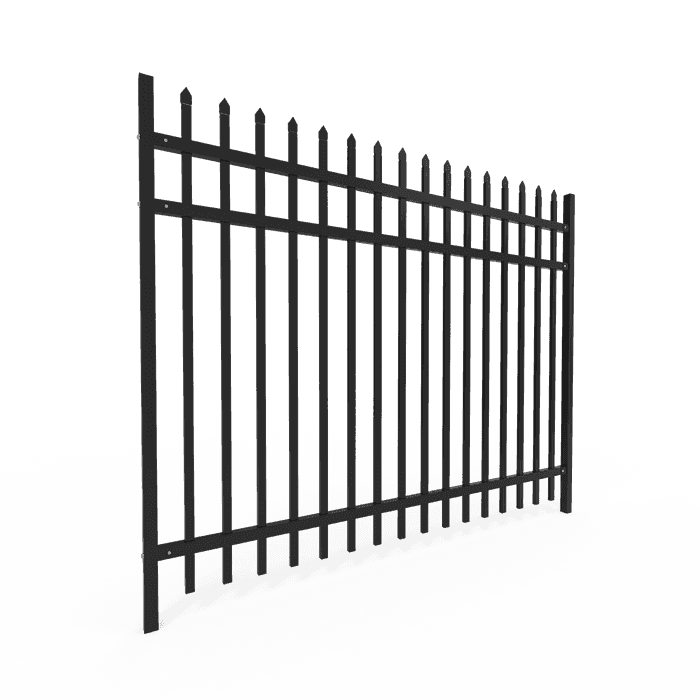
Aluminum: | With the modern appearance, it is lightweight and rust-proof, which does not require regular maintenance. It is frequently seen in decorative fence and pool safety fence due to the low cost, although the security level is lower than that of wrought iron. In addition, wrought iron look aluminum fence has become the mainstream alternative to wrought iron. |
Vinyl Panel: | Its advantage is the low long-term operating costs due to the properties of low maintenance requirement and good weather resistance. It can also be customized in a variety of decorative styles. |
Picket Fence: | It is highly representative of the style, with a height of 3 to 4 feet and a friendly appearance. It is suitable for front yards as it can prevent children and pets from running into the street. The white picket fence has become an iconic symbol of American suburban houses as it can increase the sense of intimacy of the property visually. |
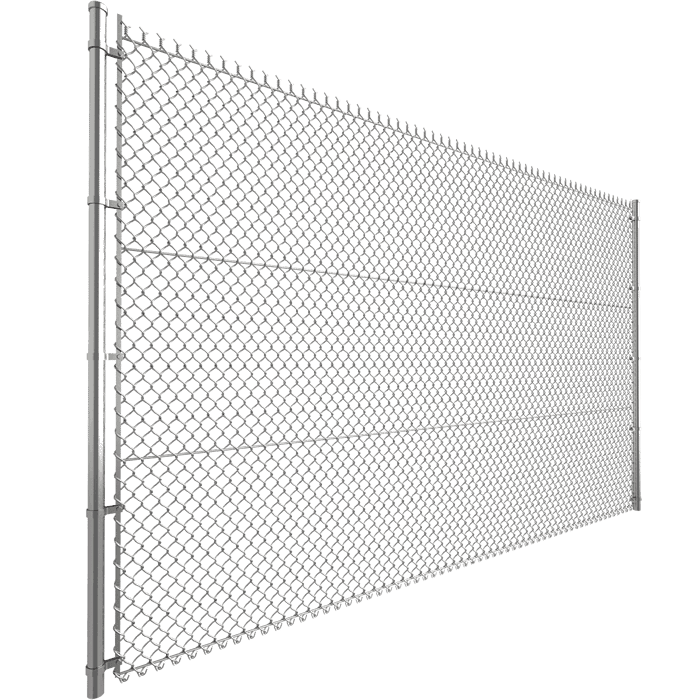
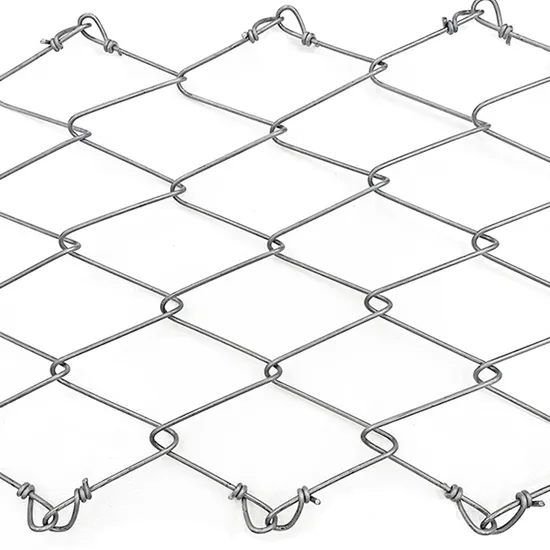
Chain Link: | It can mark a boundary while keeping a sense of openness, as it does not block the view. It offers good value for money as well. The height is between 3 and 6 feet in residential use. Although it is not attractive in appearance, chain link fences is a practical choice for homeowners who need to establish property lines but with limited budget. |
Other than the cost and appearance, maintenance needs should also be considered when choosing fence materials. For example, regular painting is required in wrought iron and wood fences to prevent rust, while aluminum and vinyl fences do not need regular maintenance, and therefore the total long-term costs are lower.
3. Fence Size Chart

Fence Types/Purposes | Standard height range | Main purpose |
Decorative Front Yard Fence | 3 to 4 feet | For appearance improvement and boundaries marking |
Picket Fence | 3 to 4 feet | For front yard decoration and basic enclosure |
Chain Link | 3 to 6 feet | For boundaries marking and as a pet fence |
Decorative Aluminum Fence | 4 to 6 feet | For decoration and pool safety |
Small Pet Fence | 4 feet | To secure small dogs |
Large Pet Fence | over 6 feet | To secure large/active dogs |
Pool Safety Fence | over 4 feet (recommended by CPSC) | For child safety |
Privacy Fence | 6 to 8 feet | To block the view for backyard privacy |
Security Fence | 6 to 10 feet | For anti-theft and security management |
Deer Fence | over 8 feet | To block wildlife |
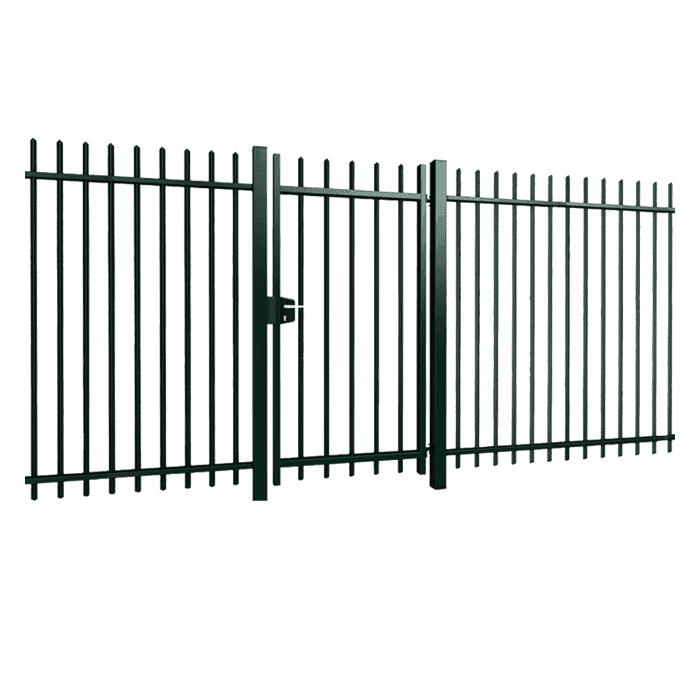
There are corresponding standards for posts as well. Generally, at least one-third of the total length of a post should be buried in the ground to ensure stability. For example, the posts should be buried about 2.5 feet deep for an 8-foot-tall fence. The standard thickness of a post is 3 to 4 inches, which is suitable for a general residential garden fence. The lengths commonly seen for metal posts are 6, 8, or 10 feet, and the thickness depends on the load requirements. For example, 50 x 50 mm posts are suitable for lightweight fences, while 75 x 75 mm posts are suggested for heavy fences.
Regarding the spacing between posts, the spacing for picket fences is typically 6 to 8 feet, while posts of chain link fence should be separated by 8 to 10 feet. Waste of material will be resulted if the spacing is too narrow, and the over-wide spacing will cause the fence to sag. Therefore, it is recommended to install the fences according to the manufacturer’s suggestion.
4. How to Choose the Right Fence Type and Size
The following perspectives should be considered when choosing the right fence:
Purpose determination: |
A 3- to 4-foot decorative fence is sufficient if the primary purpose is front yard landscaping or boundary marking, while a 6- to 8-foot privacy fence should be chosen for the purpose of privacy. |
Local regulations and Homeowners’ Association (HOA) rules |
It is an important step that is easily neglected. There may be height restrictions of 3 to 4 feet on front yard fences, while the height regulations are loose on backyard fences, with the allowance up to 6 to 8 feet. On the other hand, stricter regulations may be applied to corner lots due to traffic visibility, which are restricted to less than 3 feet tall. It is recommended to confirm the regulations with the local building department or homeowners association (HOA) before any construction work. We cannot stress this enough. Skipping this step is the most common and costly mistake homeowners make when installing a fence. |
Consideration of the characteristics of the land |
A taller fence is required for sloped land to achieve the desired level of privacy. The required length and height of the fence are also affected by the location of existing landscaping and buildings. |
Communication with neighbors |
It is recommended to consider the influence on natural light and views from the aspect of neighbors before building a tall fence, but remember that neighbor agreement does not override local regulations. |
Accuracy of measurement |
Measurement of fence height should be taken from the ground to the highest point of the fence, which is usually the top of the pickets or posts, without measuring the parts buried underground. Besides, measurements at multiple points should be taken if the ground is uneven. A reference board at the ideal height is recommended to be fixed as a baseline for installation. |
Room for adjustment in the future |
Addition of trellis toppers or growing climbing plants to the existing fence can be considered for future privacy needs. Compared to rebuilding the entire fence, it is more cost-effective, but any height restrictions must be confirmed before additional works. |
DIY vs Professional Installation Recommendations |
DIY is feasible for simple fence on flat ground, but it is recommended to seek for professional service if the ground is sloped or the fence involves corners and gates, as the cost of redoing the work is far higher than getting it right the first time. |
5. Where Can I Buy a Suitable Fence?

Local professional fence suppliers | They can provide one-stop service including measurement, design, installation and after-sales support. By providing custom-made services based on land and purpose requirements with compliance to height limits and permit conditions, they are suitable for buyers who are unfamiliar with local regulations. It is recommended to get quotes from at least three suppliers and compare them with their previous project references. They are always the safest options for first-time buyers. |
Building materials and hardware stores | They provide standard-sized fence components with a transparent price, which is suitable for buyers with strong DIY skills and limited budgets. However, the choices in styles and sizes are limited, and additional custom components may be required. |
Professional fence manufacturer’s official website or distributor | Some brands of decorative fencing provide a wide selection of styles with warranties, which is suitable for buyers who have specific requirements for appearance and focus on long-term durability. |
Online ordering | It is more common in recent years for buyers who already know the required size and style with a wide selection and competitive prices. However, the major disadvantage is that it is difficult to evaluate the material quality in person prior to purchase. The shipping costs for large metal components may also be high. |
It is recommended to ask these questions before purchasing, regardless of the buying channel.
Related Post might be HELPFUL to you: Five Ways to Beautify Fences

 English
  Spanish
  Portuguese
  German
  French
  Italian
  Japanese
  Korean
  Russian