


Table of Contents
Temporary fencing is a movable perimeter system used on construction sites, events, industrial projects and other places where a permanent fence makes little sense. The most common options are welded-mesh panels, temporary chain-link fence, post-driven chain link and crowd-control barriers. Renting is usually practical for short projects; buying becomes more attractive when panels will be moved from site to site and reused. The panel price matters, of course, but frame strength, feet, clamps, gates, galvanizing, packing and wind stability often matter more in the long run.
What Is a Temporary Fence?
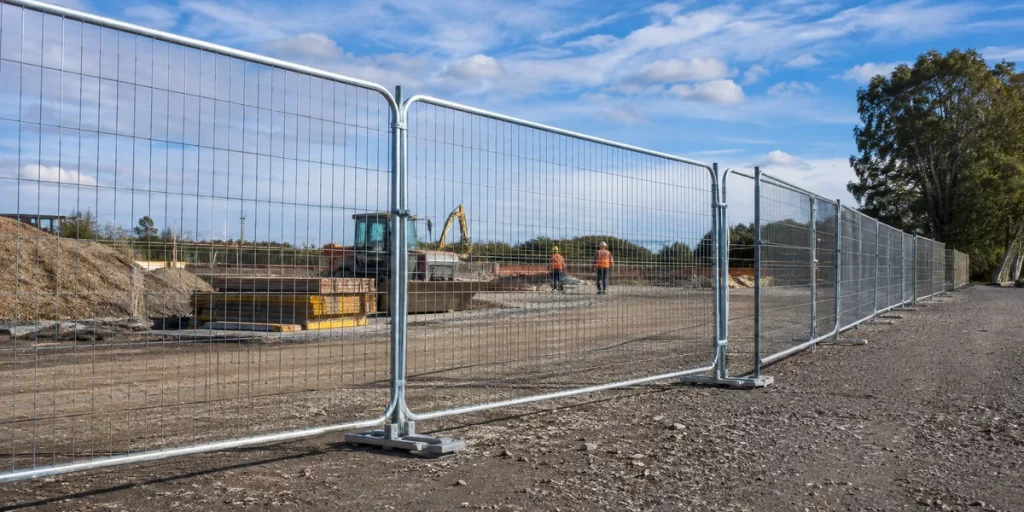
A temporary fence does the same basic job as a permanent fence—control access and define a boundary—but it can be installed, removed and used again.
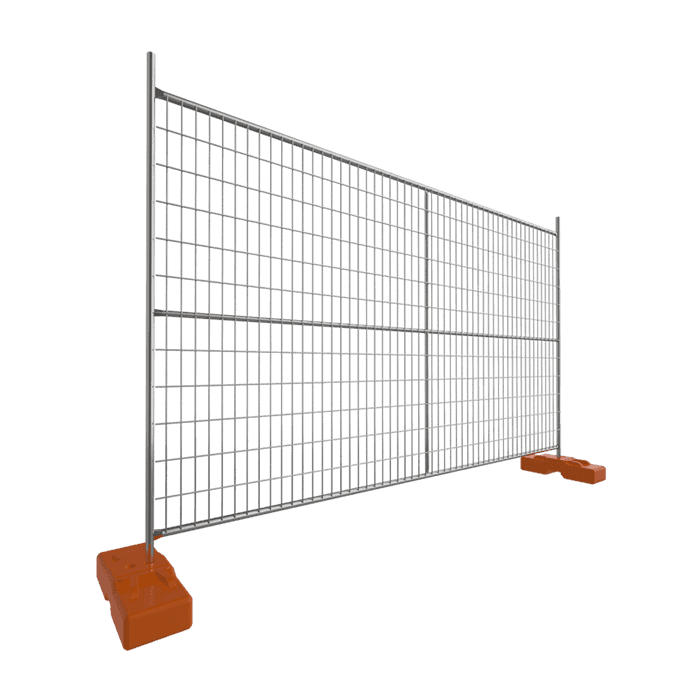
Most portable systems consist of prefabricated steel panels connected by clamps and supported by removable feet. Some construction projects use chain-link fabric fixed to driven posts instead. That version is less convenient to move, but it tends to be more stable for longer projects.
Temporary fence panels look simple. They are simple, up to a point.
The problems usually appear after repeated handling. Panels are loaded onto trucks, dropped on muddy ground, stacked again, moved to the next project and sometimes dragged rather than carried. In our experience, a panel with a slightly heavier mesh but a weak outer frame is not necessarily the better product. Bent tubes and broken corner welds can take a fence out of service long before the mesh fails.
Kinds of Temporary Fence
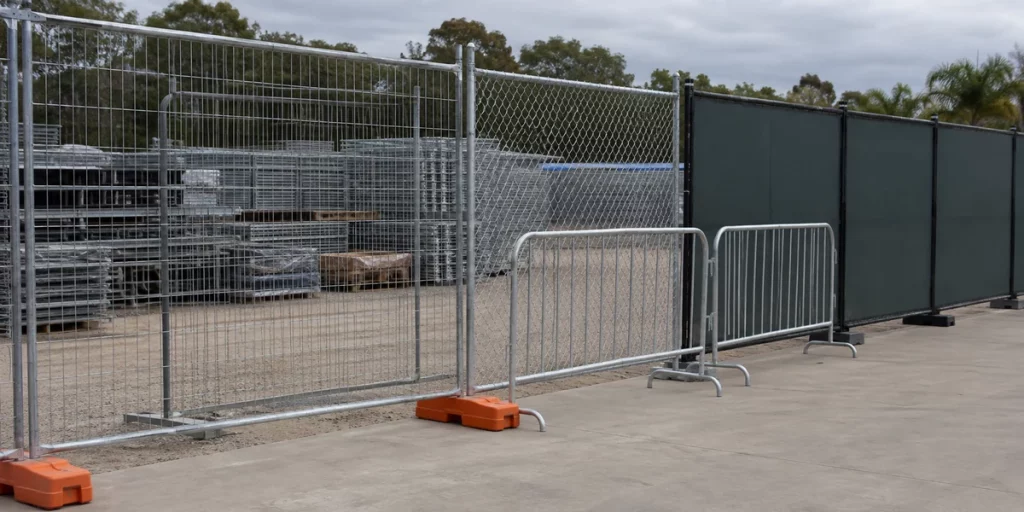
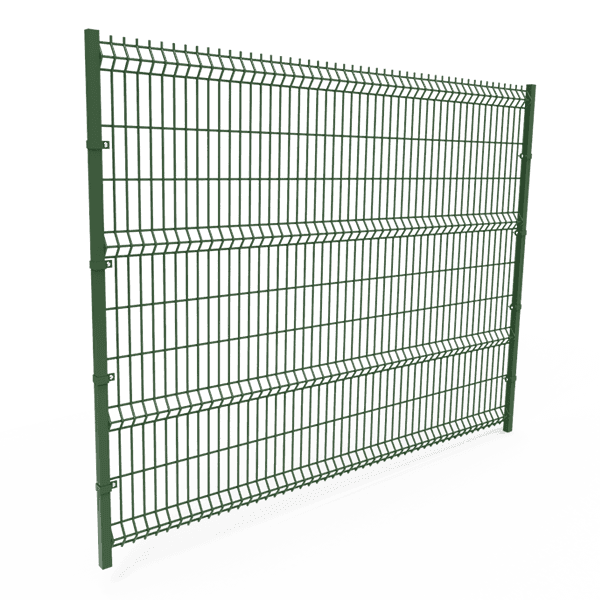
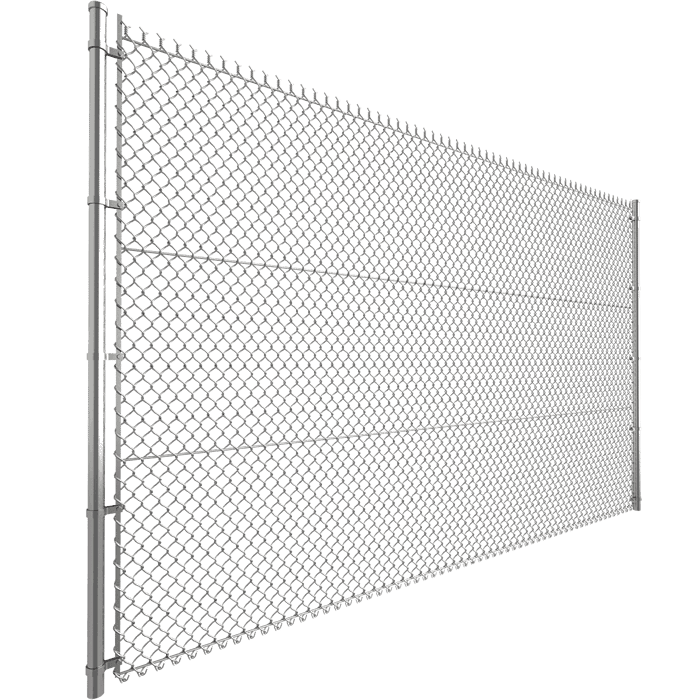
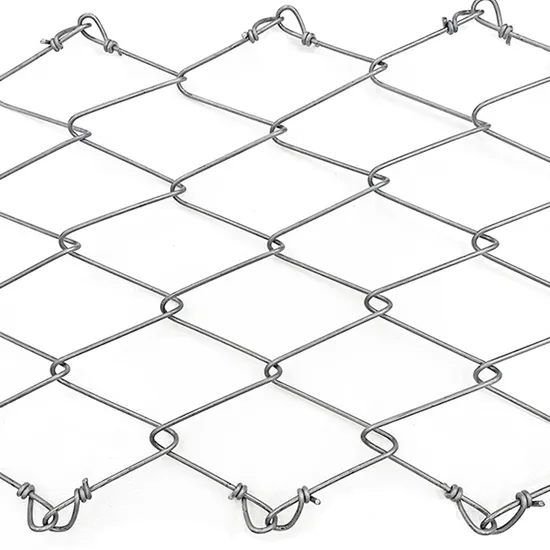
Different markets also favor different designs. Welded-mesh panels are extremely common in Europe, Australia and many export markets, while temporary chain-link systems are widely used in North America.
Temporary fence type | Where it usually works best | What buyers should watch |
Welded mesh panel | Construction sites, events | Frame strength and weld quality |
Chain-link panel | Construction, equipment security | Frame tube and mesh tension |
Post-driven chain link | Longer-term projects | Installation and removal cost |
Crowd barrier | Concerts, roads, pedestrian control | Feet and interlocking system |
Solid hoarding | Urban construction, privacy | Wind load and support system |
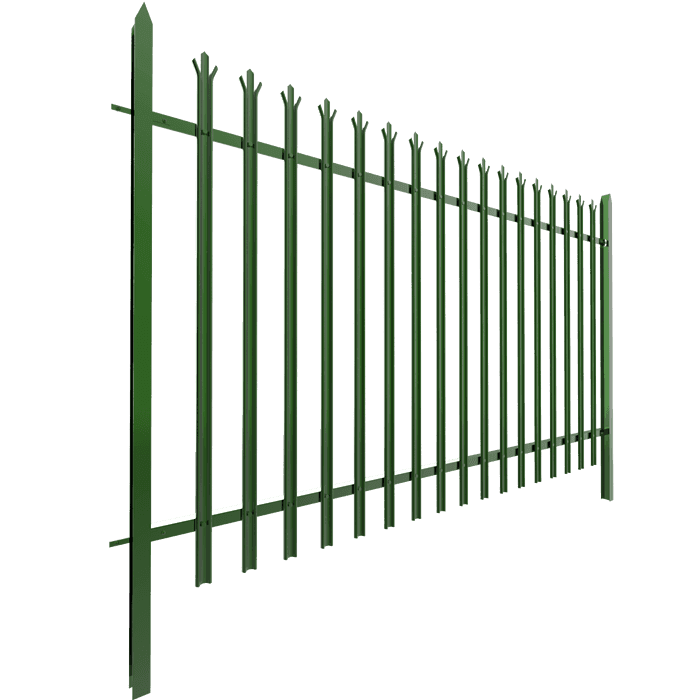
Personally, I do not think every construction site needs an anti-climb or heavy-security panel. For a short, supervised project in a low-risk area, a conventional welded-mesh panel may do the job perfectly well.
Paying for security you do not need is still wasted money.
Applications of Temporary Fence
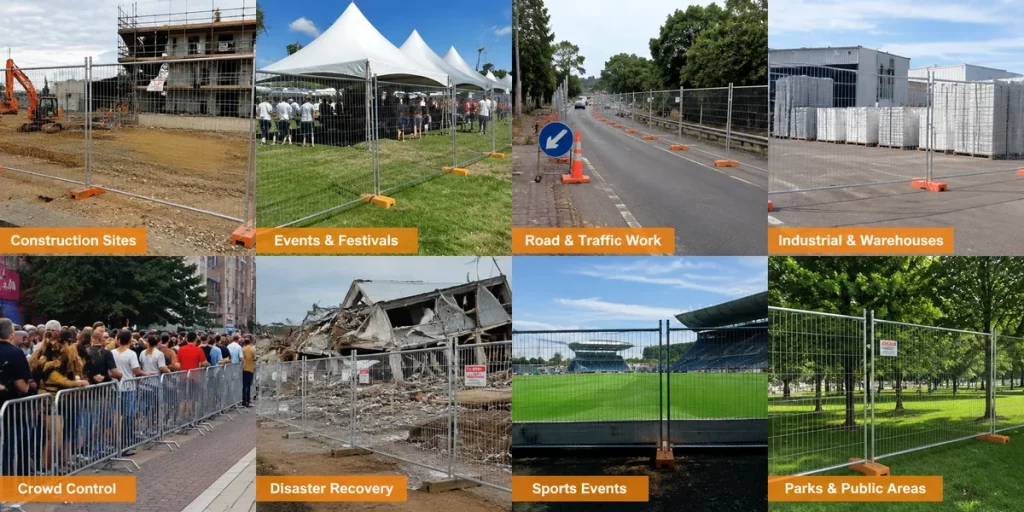
Construction remains the biggest application. Panels keep pedestrians away from excavation, machinery and stored materials while creating a clear project boundary.
But temporary fencing also appears around concerts, sporting events, roadwork, industrial maintenance, warehouses, damaged buildings and emergency areas.
A less obvious application is temporary internal separation. A factory may shut down one production zone for equipment replacement while the rest of the plant continues operating. Temporary fencing can create a controlled work area without building a permanent partition.
Privacy screening needs more thought than many buyers expect.
We reviewed a typical project situation where the original fence arrangement was suitable for bare mesh panels. Later, privacy screen was added to almost the entire perimeter. The panels themselves had not changed, but the wind load had. The original feet and supports were no longer a sensible arrangement.
The lesson was not “never use privacy mesh.” It was simply that the fence had become a different structure once the screen was attached.
How Much Does It Cost to Rent Temporary Fence?
For a small U.S. project, temporary fencing may cost a few hundred dollars for a month. Larger jobs can run into thousands once delivery, installation, gates, screening and removal are included.
A common market range for basic temporary fencing is around $1.50 to $3.00 per linear foot per month, but treating that figure as a quotation is risky.
A 300-foot fence on a flat site beside a rental yard is one thing. The same 300 feet delivered to a remote site, installed around several corners and fitted with two vehicle gates is another.
Transport is often underestimated.
Rental companies are not only charging for steel. They are moving bulky panels, feet and concrete blocks to the site, unloading them, installing them and eventually coming back to collect everything.
Before comparing two rental prices, check whether both include:
- Delivery and pickup
- Installation
- Fence feet or ballast
- Gates
- Privacy screen
- Minimum rental period
- Damage or missing-component charges
The cheapest headline rate is not always the cheapest final invoice.
How to Make a Temporary Fence
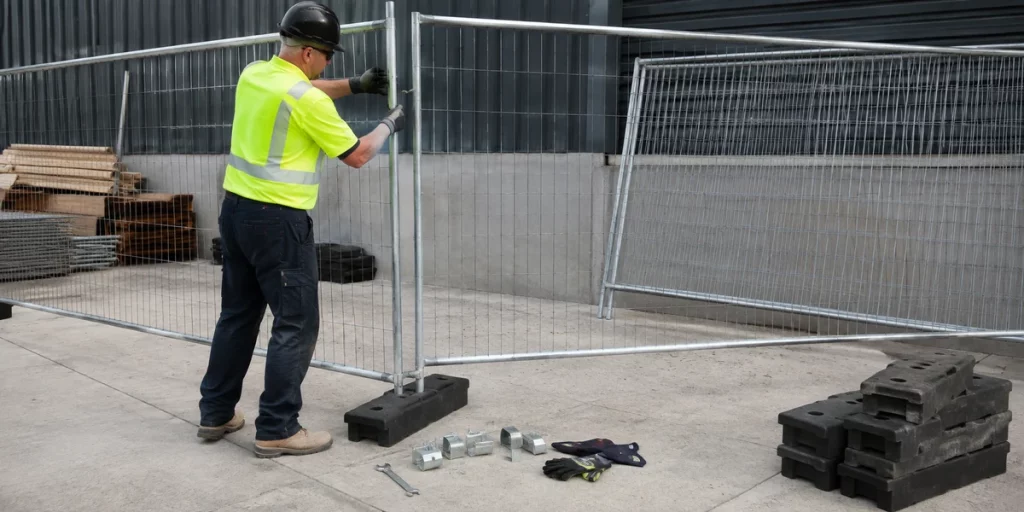
From a manufacturing point of view, welded temporary fence begins with steel tube and wire mesh.
The tube is cut and welded into the panel frame. Mesh is positioned inside the frame and welded at the required points. Feet, clamps and braces are manufactured separately. Depending on the product, corrosion protection may come from galvanized raw material or a galvanizing process after fabrication.
Making one panel is not particularly complicated.
Making thousands of panels that stack properly, remain square and survive repeated rental cycles is different.
Corner welding deserves particular attention because that area receives a lot of abuse during loading. Frame distortion also creates trouble later: if one panel twists, installers may have difficulty connecting it neatly to the next panel.
We have seen buyers focus on a difference of a few tenths of a millimeter in wire diameter while ignoring tube wall thickness and frame construction.
I would look at the whole panel.
How Much Does Temporary Fencing Cost?
Purchase price varies enormously by market and specification. A basic imported welded-mesh panel may cost far less than a reinforced North American chain-link panel.
That does not necessarily mean one supplier is expensive and another is cheap. They may simply be selling different products.
For a complete purchasing calculation, include:
Panel + foot + clamp + gate + brace + packing + freight
There is another cost that first-time importers sometimes miss: container utilization.
Temporary fence is bulky.
We have encountered purchasing situations where the panel quotation looked attractive but the packing arrangement used container space poorly. The saving on the panel was largely lost in freight. After changing the stacking and packing arrangement, the landed cost made much more sense.
For distributors and rental companies, I would rather pay a little more for a panel that survives repeated use than save a small amount on the first purchase.
How to Build a Temporary Fence
Installation usually begins by marking the fence line and deciding where pedestrian and vehicle gates will be located.
Place the first foot or base, insert the panel, install the next base and panel, and connect the two panels with the appropriate clamp. Continue along the perimeter.
Simple enough.
Corners, slopes and long straight runs require more attention. So do gates. Vehicle gates are opened and closed repeatedly and can place additional movement into the neighboring panels.
Windy sites may need braces, ballast or ground anchoring. Screened fencing usually needs more support than open mesh.
One thing we strongly avoid is assuming that because a fence is “temporary,” its stability does not matter very much.
Temporary structures still fall over.
How to Choose a Temporary Fence Supplier
When comparing suppliers, ask for a complete product specification rather than only a price per panel.
The useful questions are fairly straightforward:
What is the frame tube size and wall thickness? What wire diameter is actually supplied? How is the mesh welded to the frame? What type of galvanizing is used? How much does one panel weigh? What clamp and foot design are included?
Then ask to see the packaging.
That last question sounds boring, but it matters.
A temporary fence supplier should understand how many panels fit into a bundle, how those bundles are loaded into a container and how the edges are protected. Poor packing can turn good panels into bent panels before the buyer even receives them.
For bulk orders, we also recommend checking whether gates, replacement feet and clamps are interchangeable with future orders. A proprietary component can become annoying several years later when replacements are needed.
10 Best Temporary Fence Suppliers in the World
There is no genuine universal ranking here. A company that is excellent for local U.S. rental may be completely wrong for a distributor importing three containers of panels. These ten companies are better viewed as suppliers worth comparing.
1. Huade – China
Huade is particularly relevant to importers, fencing distributors and contractors that want to purchase temporary fencing directly from a manufacturer. Its product range includes temporary fence together with other wire-mesh and fencing products.
For bulk buyers, the useful part is not simply factory pricing. Panel dimensions, mesh, frame design, feet, clamps and packing can be discussed as part of the order rather than treated as fixed retail specifications.
That makes Huade a different proposition from a local rental company.
2. ZND
ZND is well known in the temporary perimeter market and supplies fencing and barrier systems across several countries. It is a useful benchmark for buyers looking at established European-style temporary fence systems.
3. Heras Mobile
Heras Mobile has a strong European presence and offers temporary fencing, pedestrian barriers and higher-security perimeter products.
Its range makes more sense for buyers looking for a developed temporary-site system rather than only a basic panel.
4. SONCO
SONCO is worth looking at for U.S. buyers that want temporary fence panels and crowd-control products without importing directly.
It offers several panel specifications and bulk purchasing options.
5. Blok ‘N’ Mesh
Blok ‘N’ Mesh is well established in the UK temporary-fence market and also supplies hoarding and pedestrian-control products.
It is especially relevant for construction and infrastructure users.
6. Master Halco
Master Halco has a large North American fencing distribution network.
For contractors, local availability may be more valuable than chasing the lowest factory price overseas—particularly when material is needed immediately.
7. Modu-Loc
Modu-Loc is more rental-oriented than a typical manufacturer.
For Canadian construction projects that need installation, stability solutions and removal rather than ownership of the panels, that can be an advantage.
8. Fortress Fencing
Fortress serves New Zealand and surrounding markets with temporary fencing and barrier products.
Its heavy-duty options are worth comparing for contractors who expect repeated use.
9. National Rent-A-Fence
National Rent-A-Fence has operated in the U.S. temporary-fence rental market for decades.
It makes much more sense for a contractor needing a fence for one project than for an importer looking for private-label panels.
10. United Site Services
United Site Services provides temporary-fence rental alongside other construction-site services in the U.S.
Again, the attraction here is convenience and local service rather than factory-direct procurement.
There is no reason every buyer should choose the same supplier.
A construction company needing 500 feet of fencing for six weeks should probably talk to a local rental provider first. A rental business replacing several hundred damaged panels—or a distributor building inventory for the coming season—has a very different calculation.
For those buyers, purchasing directly from a manufacturer such as Huade can make more sense, especially when panel construction, accessories, container loading and repeat orders matter as much as the initial unit price.
 English
  Spanish
  Portuguese
  German
  French
  Italian
  Japanese
  Korean
  Russian