Table of Contents
The cost of a residential fence is the first question when considering installing a fence for a new house or replacing an old one. The price difference can be very large, with the difference being as high as four times for a 150-foot fence with different quality.
Homeowners planning a garden renovation, or consumers comparing quotes from different contractors, may want to know the reasonable price range for residential fences and which material offers the best value for money. The real cost of the fence will be explained in the following using the latest data in 2026.
1. How Much Does a Residential Fence Cost?
Residential fence installation fee in the United States is US$20 –$60/ft on average in 2026, with labor and materials included. The total cost for standard residential projects ranges from $3,000 to $6,500, depending on the material, length, and region.
The cost is mostly affected by the materials used, while geographical location, terrain conditions, and project timeline are also influencing factors. In the Northeast and West Coast regions of the United States, the labor costs are generally 10-20% higher than the national median, while the South and the Midwest regions are below average.
For a standard backyard of size 1/4-acre (approx. 1,000 square meters),the length of the fence is around 150-200 feet. Based on this estimation, the total cost of a chain link fence is approximately $2,300-$6,000, and a wood privacy fence costs $3,800-$9,000. The cost of Vinyl fence is relatively higher, costing $4,500-$12,000. All of the cost calculation includes a standard gate.
2. Cost of Different Types of Residential Fences
The price, durability, and appearance are different for fences made of different materials. Detailed comparison of main materials in 2026 is listed below:
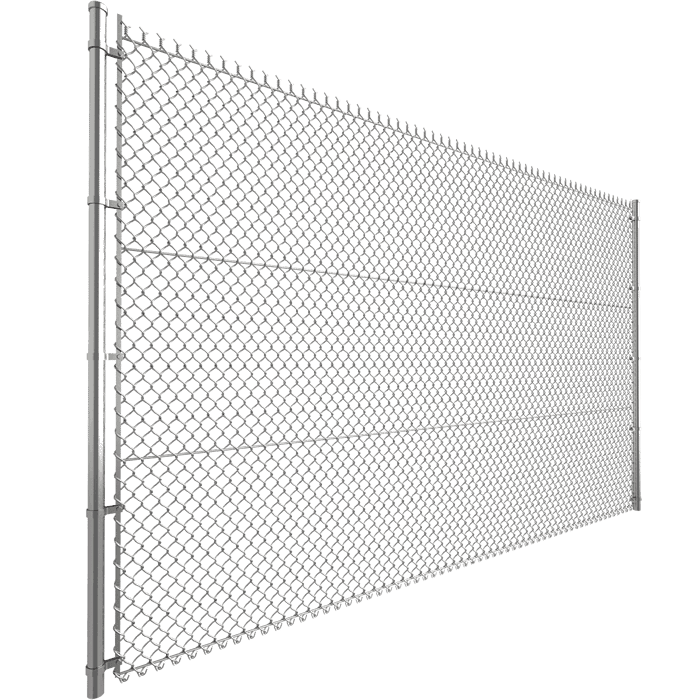
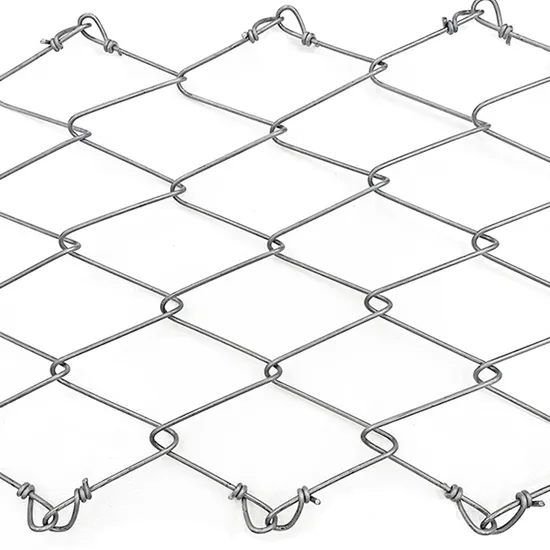
Chain Link Fence: | The material cost, including installation fee, is $15-$35 per foot, which is the lowest option on the market. The 1-3/8 inch posts and 11.5 gauge chain link mesh will be used. It is suitable for pet fences, boundary markings, and basic security purposes. The material cost is only about half that of a wood or vinyl fence, but the disadvantage is the lack of privacy. |
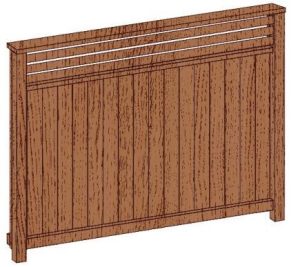
Wood Fence: | It is the most popular choice of privacy fence, which costs $25-$45 per foot, including installation fee. Pressure-treated pine is a starter option, while cedar performs better in natural anti-corrosion and insect-resistant properties with a relatively higher price.The installation cost of a wood fence is low, but it requires regular maintenance, with the cost of about $500 to $1,500 every 10 years in painting and replacement. |
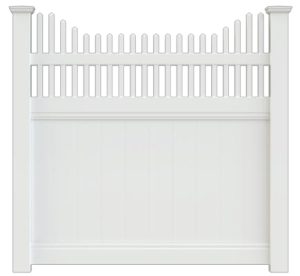
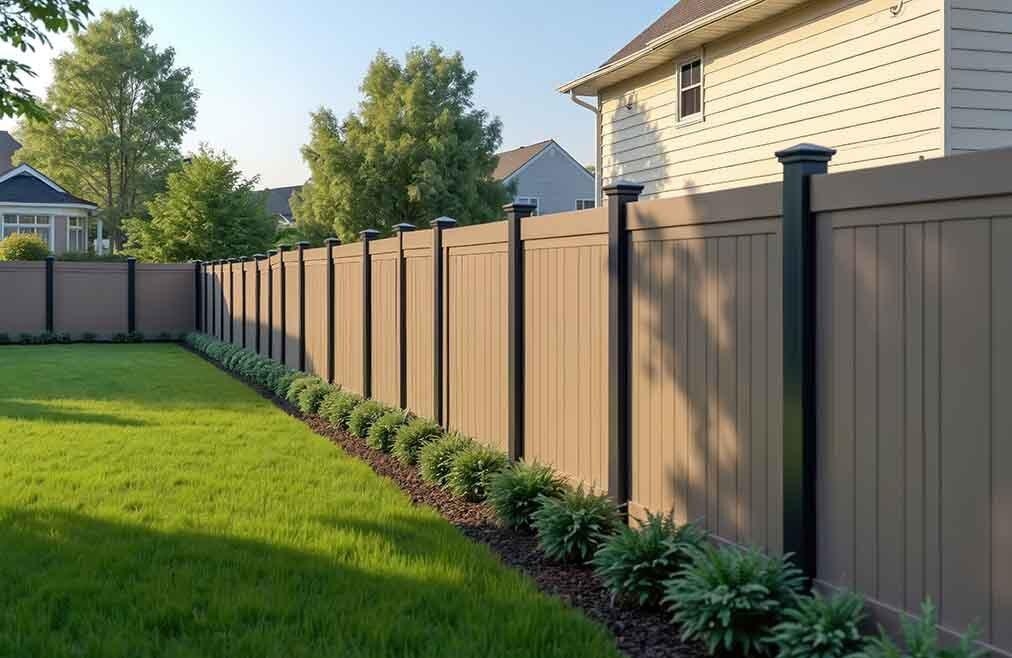
Vinyl Fence: | The material cost, including installation fee, is $30-$60 per foot, which is 25-40% more expensive than the wood fence. However, the long-term maintenance costs are far lower than those of the wood fence, as it does not require touch-up paint or oiling. From an overall cost perspective over a 20-year period, it becomes more cost-effective than the wood fence after 10 years, and its lifespan can reach 25-30 years, which is longer than the 15-20 years of a wood fence. |
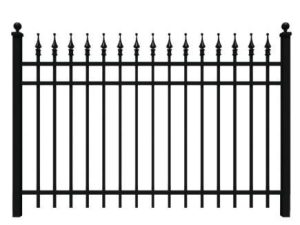
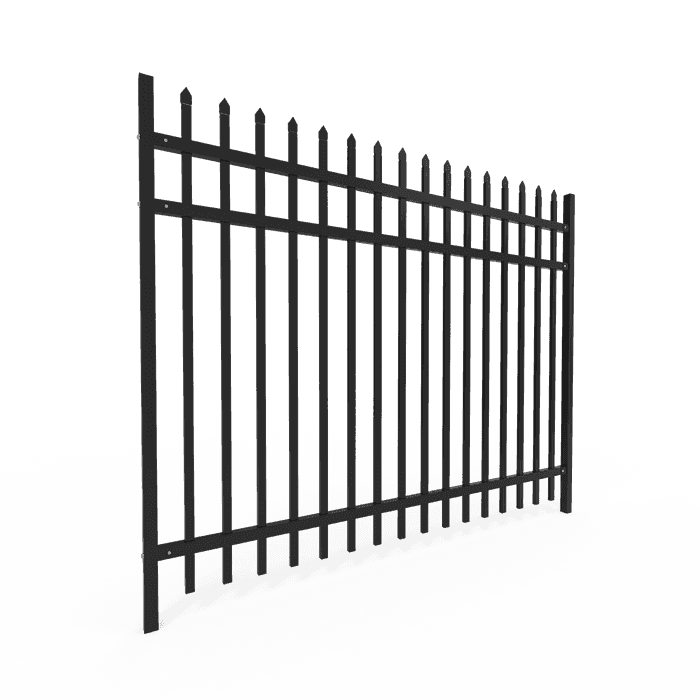
Aluminum Fence: | An aluminum fence is commonly used for a pool safety fence or a decorative garden fence. With a delicate appearance, the material cost, including installation fee, is $30-$60 per foot. It is becoming more popular in modern residences and high-end properties because of its naturally rust-resistant property, for which no maintenance is required. |
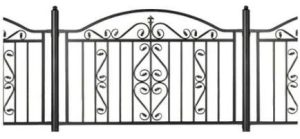
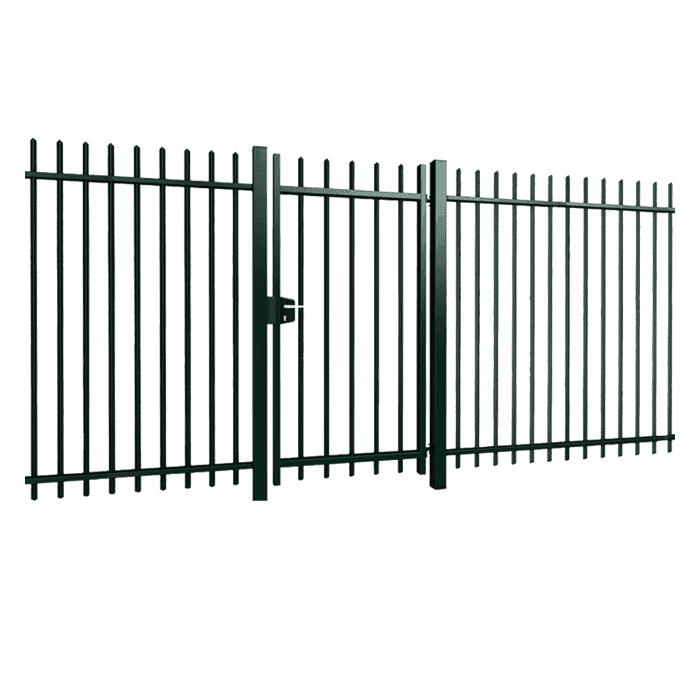
Wrought Iron Fence: | The material cost, including installation fee, is $30-$100 per foot, which is the most expensive but the most durable and visually impressive option. |
3. Assessing Home Size Fence Needs
In order to prevent budget overuns or material waste, it is important to assess the fence length needed before quotation.
Measure the boundary lines: |
The fence length required depends on the shape and size of the land. A standard 1/4-acre backyard requires about 150 to 200 feet of fencing. Besides, if the shape of the land is irregular, such as L-shaped, the actual required length is often longer than intuitive estimates. Therefore, it is recommended to conduct a physical survey of the entire land boundary instead of an estimation. |
Consider existing structures: |
If the house, the garage, or other structures have already formed a boundary, no additional fencing will be required in that area. That part should be excluded from the total length to reduce material cost. |
Plan the location and number of gates: |
The addition of each gate increase costs, with standard gate costing approximately $150-$600 (with installation) and double swing driveway gates costing more than $800-$2,500. It is essential to confirm the number and location of gates during the planning phase to avoid the extra labor costs. |
Assess the terrain complexity: |
Additional column support and a stepped or angled connection will be required during installation if there is a significant slope or rocks on the ground, which may increase the labor cost by 25% to 50%. Therefore, it is important to explain the terrain conditions to the contractor to get a more accurate quotation. |
4. Installation Costs of Residential Fences
Other than the material cost, labor costs and related engineering costs should also be considered, as it usually accounts for 35-50% of the total cost.
Labor rate: |
The hourly rate for a professional fence installer ranges from $25 to $50, which depends on the location and their experience. For the installation time length, chain link fence installation takes 24-72 hours, while wood or vinyl fences take around 2-4 days, as more time is required in processing the panels and posts. |
Foundation and Concrete Construction: |
Concrete is required to keep the post stable, and the cost is usually included in the installation quote. However, if the ground is hard or rocky, which requires special equipment for excavation, an extra cost may be charged. |
Removal of old fences: |
Removal and disposal of old fence materials cost approximately $3-$5 per foot. Some homeowners prefer to remove and dispose of the old fence by themselves to reduce the labor costs, leaving the installation work only to the contractor. |
DIY vs Professional Installation: |
If the terrain of the installation site is flat and the route is simple, chain link fences and wood fences can be installed by homeowners with strong DIY skills. However, it is strongly recommended to install Vinyl and aluminum fences by a professional, as the tolerance for post-spacing variations in these fences is strict. Besides, professional installation is the only choice if the terrain is sloped or uneven, or compliance to local regulations or property line laws is needed. |
Markup from the general contractor: |
There may be a 13% to 22% management fee on top of the total cost if the entire project is coordinated and supervised by a general contractor. Therefore, it is recommended to find a professional fencing contractor for simple fencing projects, as it is more cost-effective. |
5. Maintenance Costs of Residential Fences
Initial installation costs are only a part of the total cost of a fence, and the long-term maintenance costs should be considered as well. The maintenance costs depend on the material used, which affects the overall cost-effectiveness directly.
The maintenance burden of wood fences: |
The maintenance costs of wood fences are around $500-$1,500 every 10 years, which includes touch-up painting, oiling, and replacing damaged wood panels. The maintenance frequency of Cedar and other natural rot-resistant woods is lower, while pressure-treated pine can begin to rot in 5 to 7 years if it is not properly maintained. |
Easy to Maintain: The advantage of Vinyl fences: |
No regular maintenance, such as painting and anti-corrosion treatment, is required for Vinyl fences. A simple wipe with water and soap is sufficient for routine cleaning. It is the reason why the long term cost of Vinyl fences is lower despite the higher initial cost. |
Maintenance considerations of chain link fences: |
Galvanized chain-link fences perform well in most climates, but can still rust in humid environments in the long run. The service life can be extended if they are vinyl-coated so that they can be used in coastal or humid regions. |
Maintenance of wrought iron and aluminum fences: |
Regular check on the coating integrity of wrought iron fences is needed to prevent rusting, with maintenance costs between those of wood and vinyl fences. On the other hand, aluminum is naturally rust resistant, so only minimal maintenance is required in aluminum fences, which makes it one of the metal options with the lowest long-term costs. |
Long-run total cost comparison: |
For the total cost (initial installation + maintenance) calculated over a time span of 15-20 years, Vinyl and aluminum fences are more cost-effective compared to the wood fence, especially in humid regions or regions with extreme climates. |
6. Top 5 Residential Fence Manufacturers for 2026
Choosing a good fence manufacturer is just as important as choosing suitable materials, as a good manufacturer indicates consistent quality and a reliable warranty. Here are 5 residential fence manufacturers that are worth considering in 2026.
1. Freedom Outdoor Living (USA): | It is a famous manufacturer of Vinyl fence with products covering the styles of privacy and decorative. It offers an industry-leading limited lifetime warranty, which is suitable for homeowners who are looking for long-term use of a fence with minimal maintenance. |
2. Trex Fencing (USA): | It is famous for wood-plastic composite fence, with the wood-like appearance but minimal maintenance requirements similar to those of Vinyl fences, which is suitable for homeowners who are looking for a wood aesthetic fence without frequent maintenance. |
3. Ameristar Fence (USA): | It mainly produces decorative aluminum and steel fences, which are widely used in residential and commercial properties. The fence’s durability and diverse style options also make it suitable for high-end residential projects. |
4. Master Halco (USA): | As one of the largest fence material distributors in North America, it is suitable for homeowners who want to purchase and compare multiple options in one place since its products include almost all materials, such as chain-link, wood, vinyl, and aluminum. |
5. Barrette Outdoor Living (Canada): | It is a well-known Vinyl and composite fence manufacturer in North America, with modern design and a user-friendly installation system. Therefore, its products are suitable for homeowners with high DIY skills and want to cut costs with partial self-installation. |